

Fire damage claims in Ireland range from a contained kitchen fire to the total loss of a home. At every scale, understanding the claims process and documenting the damage properly affects how the claim is assessed.
Documentation can look straightforward until you are in the middle of a claim. Knowing your policy terms and recording the damage properly are what allow a claim to be assessed correctly.
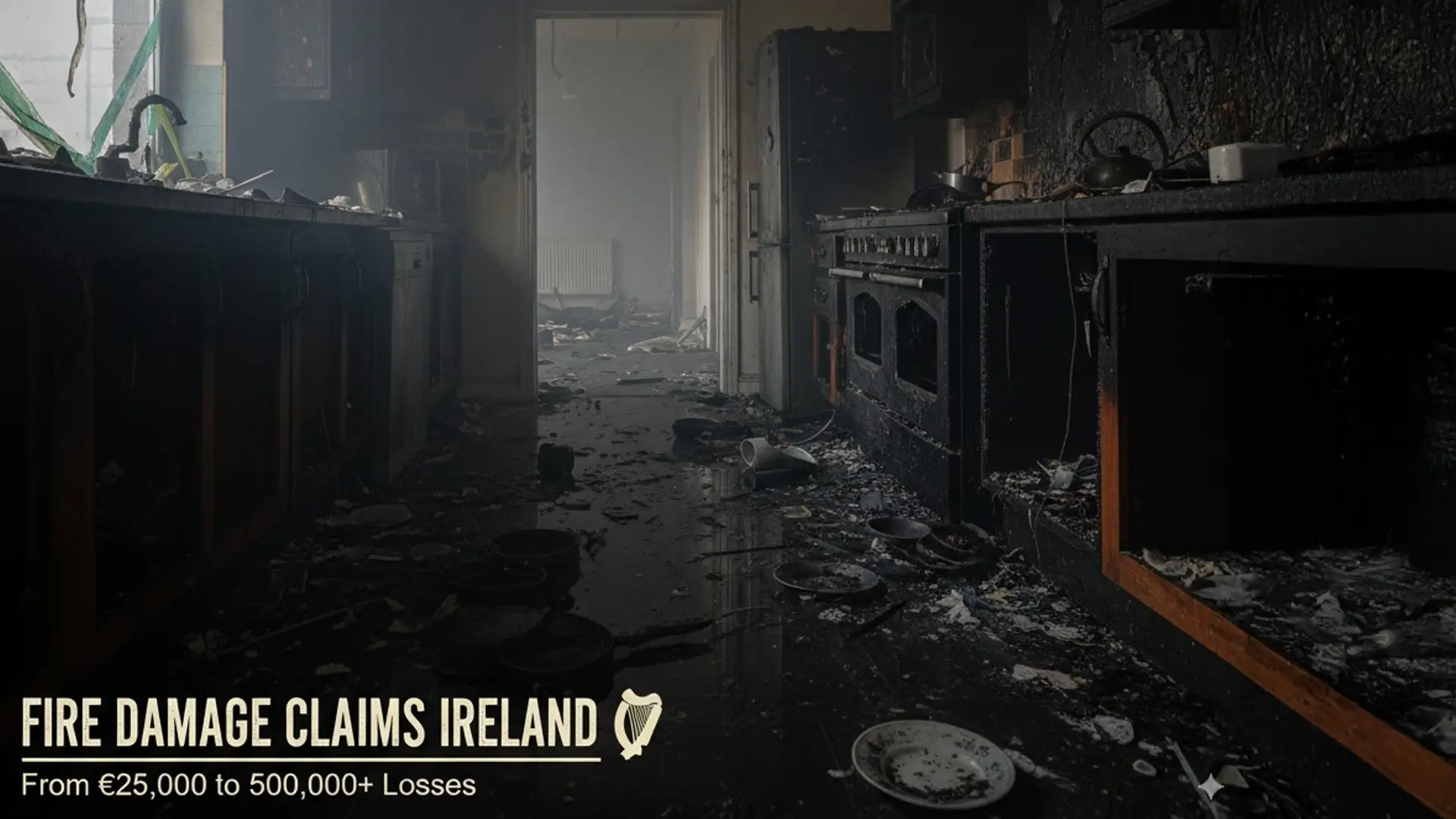
Fire Damage Claims Checklist – Immediate Action Steps
- Ensure Safety: Evacuate immediately, call 999/112
- Document Everything: Photograph all damage before cleanup
- Contact Insurer: Report the fire as soon as possible and get a claim number
- Secure Property: Board windows, cover holes, and prevent further damage
- Contact Loss Assessor: Get professional help at the same time as you notify your insurer
- Keep All Receipts: Document temporary accommodation and expenses
- Don’t Dispose of Items: Keep damaged goods until inspection is complete
- Get Multiple Quotes: Obtain contractor estimates for repairs
Most homeowners have never dealt with an insurance claim of this size before.
This guide explains how fire damage claims work in Ireland: what a claim can include, how to document it, how to negotiate and how to avoid the common mistakes that weaken a claim.
At a Glance: What Each Level of Fire Damage Involves
| Fire Severity | Key Damage Components |
|---|---|
| Small Kitchen Fire | Smoke damage throughout the house, water damage, and professional cleaning |
| Single Room Fire | Structural repairs, smoke contamination in adjacent areas |
| Multiple Room Fire | Major reconstruction, extensive smoke damage |
| Partial House Fire | Significant rebuilding, extended temporary accommodation |
| Total Loss | Complete rebuild, full contents, months of alternative housing |
Fire damage costs can be larger than they first appear. A kitchen fire that seems contained can still lead to a sizeable claim.
Why so much? The fire itself burns cabinets and appliances. But smoke spreads throughout your entire house. Water from fire hoses soaks into floors and walls. Professional cleaning becomes necessary in every room.
A fire confined to a single room usually means structural repairs as well. Smoke contamination affects adjacent areas. Hidden damage emerges during restoration.
How Underinsurance Reduces a Fire Claim
Underinsurance can affect a fire claim, and many homeowners are not aware that it applies to them. It’s crucial to avoid costly underinsurance to protect your finances.
As an illustration, suppose it would cost €350,000 to rebuild your house when you took out the policy, the rebuild cost is now €490,000 and your cover remains at €350,000.
In that illustration the property is about 29% underinsured.
Many Irish insurance policies contain an “average clause” that can reduce a claim in proportion to the level of underinsurance. In the illustration, the cover is about 71% of the rebuild cost, so a claim could be reduced accordingly and the difference would be yours to meet.
Underinsurance is often only discovered when a claim is made, when it is too late to change the cover.
How to Check if You’re Underinsured
Contact a qualified building surveyor for a current rebuild cost assessment. Compare this figure to your insurance coverage amount. If there is a gap, speak to your insurer or broker about adjusting your cover.
Online calculators give only a rough guide. A professional rebuild cost assessment gives a more reliable valuation, which can help you review your cover and avoid underinsurance.
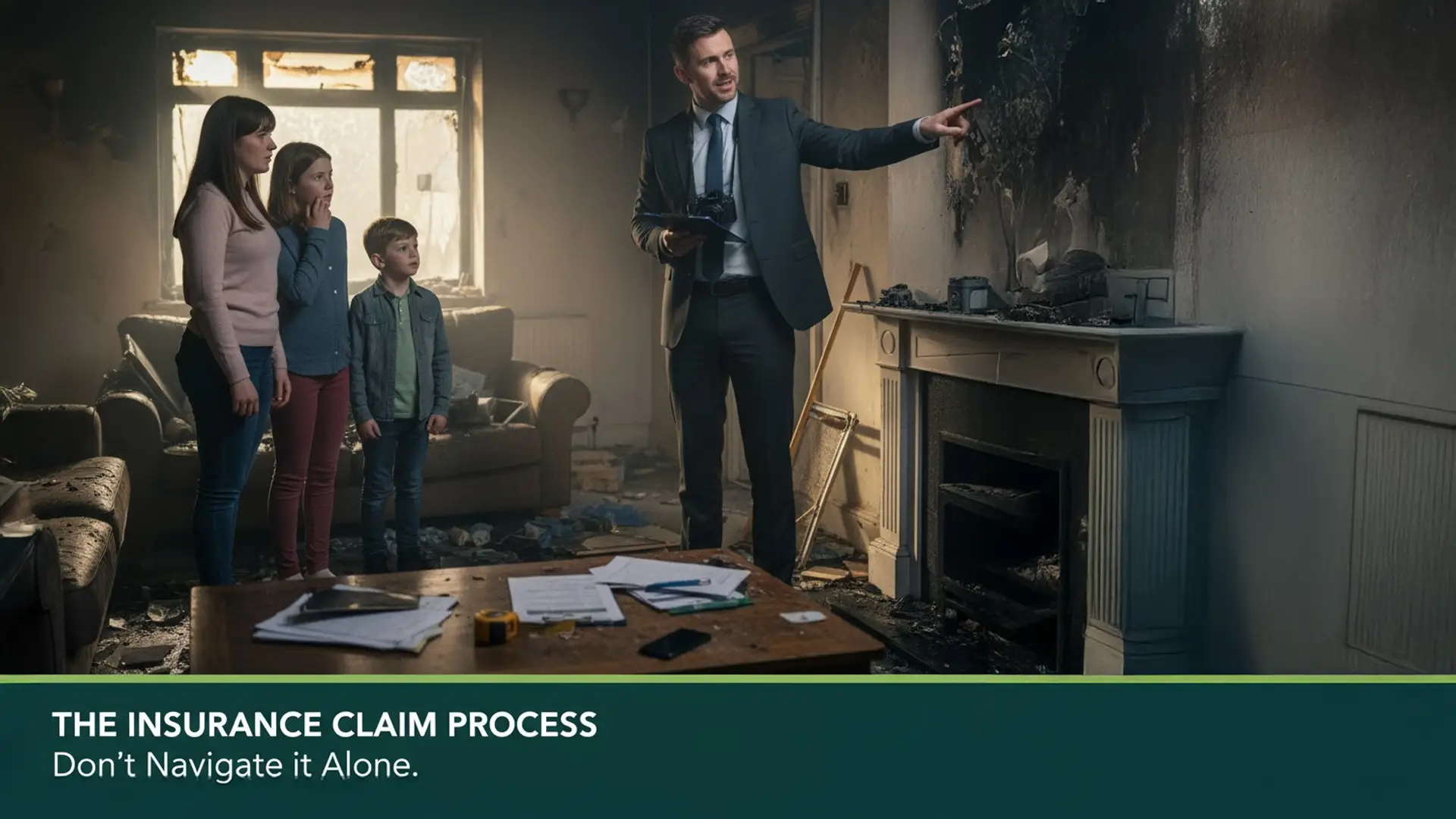
Fire Damage Insurance Claim Process in Ireland
Understanding the real insurance claims process helps you participate effectively and avoid costly mistakes at each stage.
| Stage | Sequence | What Insurance Company Does | What You Should Do |
|---|---|---|---|
| Initial Response | First | Assign an adjuster, schedule an inspection | Notify your insurer, document damage, secure property |
| Investigation | Next | Inspect the property, investigate the cause | Provide documentation, cooperate fully, and gather evidence |
| Assessment | Then | Value damage, apply policy terms | Submit receipts, get contractor estimates, query any valuation that leaves out part of the loss |
| Negotiation | After that | Present settlement offer, negotiate terms | Review the offer, negotiate professionally, and take advice before accepting an offer |
| Settlement | Finally | Finalise agreement, issue payment | Review documents carefully, sign the agreement, and receive payment |
The assessment process begins with fire cause determination. Insurance companies need to establish whether the fire resulted from covered circumstances or situations that might reduce coverage.
They examine maintenance records carefully. They check safety equipment functionality. They investigate the circumstances surrounding the fire’s start.
What Loss Adjusters Assess
They document the extent of the damage using photos and measurements. Insurers will usually ask about the cause of the fire and about maintenance, so keep service and inspection records and check that smoke alarms are working. Our guide on reasons a claim may be refused or reduced explains more.
They calculate repair costs using industry databases and local contractor rates. An estimate may be based on repair where you believe replacement is needed, or may not fully allow for specialist smoke and soot restoration. These are the points worth checking closely.
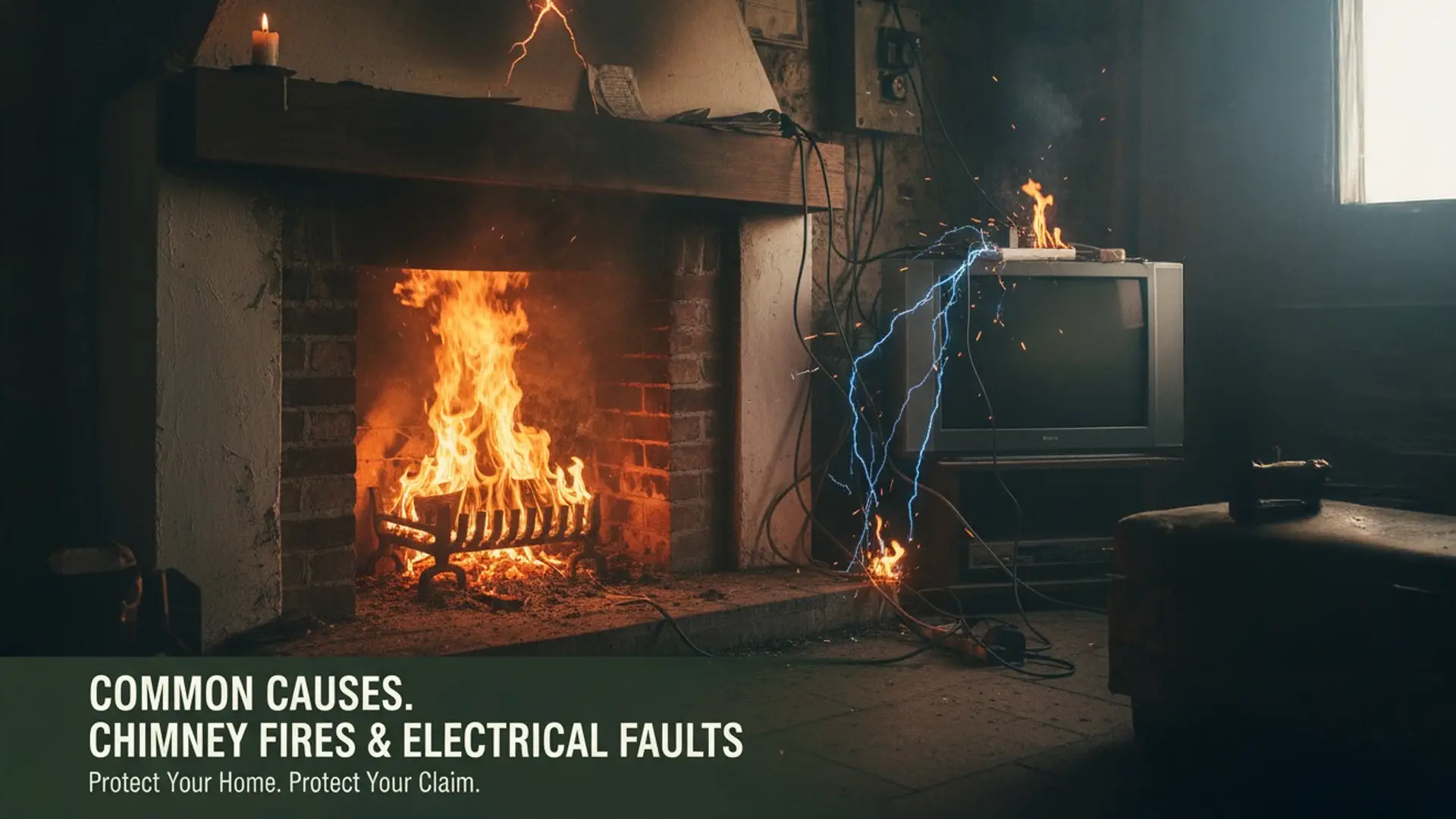
What Causes House Fires in Ireland
Understanding fire causes helps with prevention and supports your insurance claim because cause determination directly affects coverage decisions.
Chimney Fires
Chimney fires are a recognised risk for homes with open fires and stoves. Creosote buildup creates highly flammable conditions that ignite during normal fireplace use.
Regular professional cleaning helps to reduce the risk of chimney fires. Insurers may ask about chimney maintenance during a claim, so keep records.
Without documented maintenance, it can be harder to show how the property was kept.
Cooking Accidents Create Complex Claims
Kitchen fires often lead to larger claims than people expect because damage extends far beyond the immediate fire area. Grease ignition spreads rapidly. Unattended food preparation creates dangerous conditions. Equipment malfunctions cause unexpected fires. Following our 25 tips for preventing kitchen fires can help mitigate these risks.
These fires create extensive smoke damage throughout entire houses, even when fire damage remains contained to kitchen areas. Professional cleaning becomes necessary in every room. Water damage from firefighting efforts affects flooring and walls.
Electrical Problems and Maintenance Records
Electrical fires result from ageing wiring systems, overloaded circuits, and appliance failures. Insurers may ask about electrical maintenance history during a claim, so keep inspection certificates.
Have your electrical system inspected by a qualified electrician at the intervals recommended for your property. Keep all certificates and maintenance records. You’ll need them if electrical problems cause fires.
Types of Home Insurance Coverage for Fire Damage
Most Irish home insurance policies cover fire damage, but understanding your home insurance policy helps you document the claim completely and present it under the right sections of your cover.
Structural Damage and Rebuilding Costs
Building insurance covers repairs or rebuilding for walls, ceilings, floors, roofing, and all permanent fixtures. This coverage extends beyond basic repairs to include professional restoration services needed to return your house to livable condition.
Professional restoration involves extensive cleaning, deodorisation, and specialised repairs that cost much more than standard construction work. Smoke damage remediation requires specialist equipment and techniques. Water damage restoration prevents long-term structural problems.
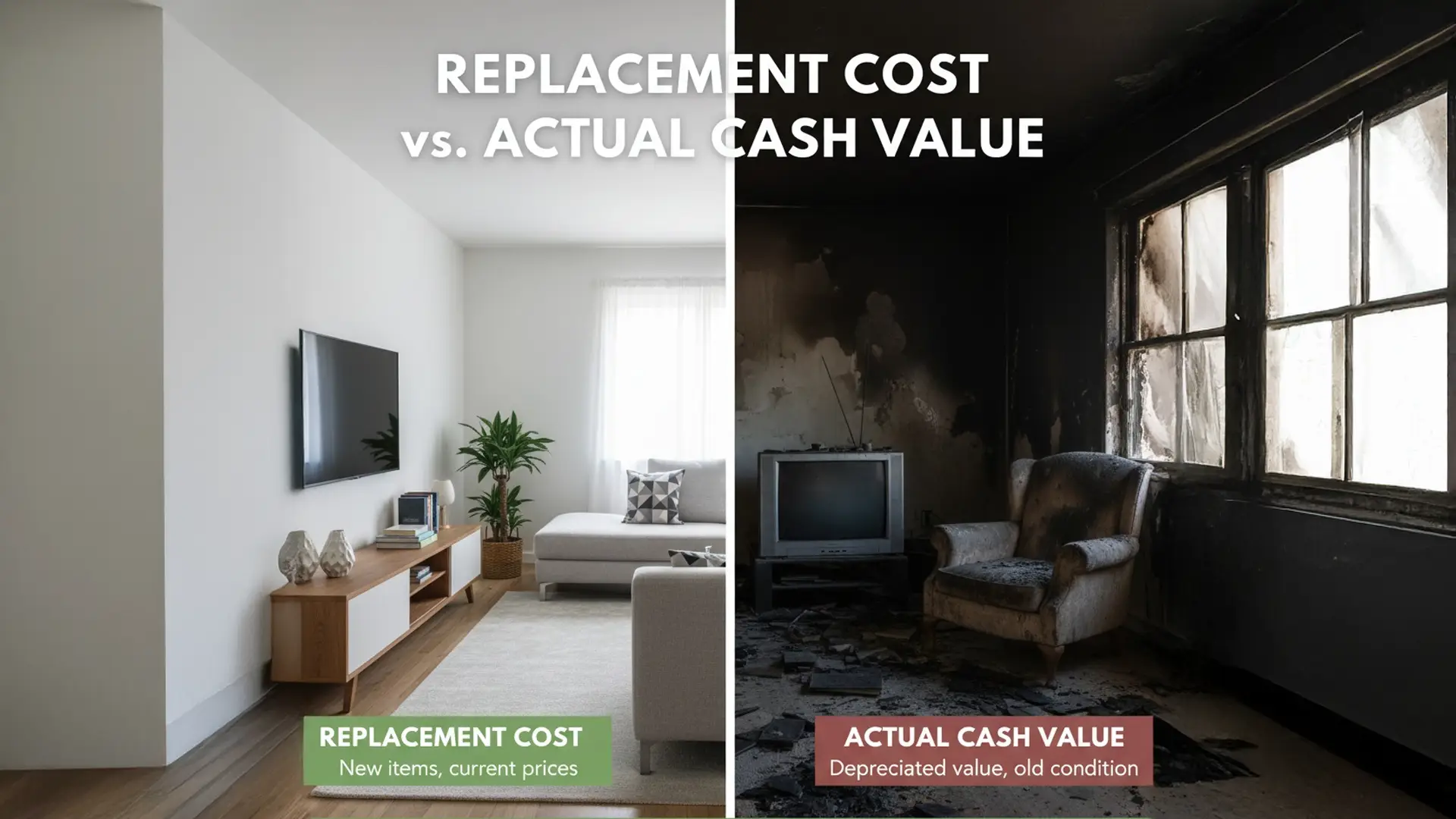
Contents Insurance: Replacement Cost vs Actual Cash Value
Contents coverage protects personal belongings damaged or destroyed by fire. The type of content coverage you have makes an enormous difference in settlement amounts.
Replacement cost coverage pays current prices for equivalent new items. A five-year-old television gets replaced with a current equivalent model at today’s retail prices.
Actual cash value coverage only pays depreciated amounts based on item age and condition. That same television might receive considerably less than its original purchase price.
Check your policy immediately. This distinction can make a large difference to how your contents are valued.
Alternative Accommodation During Repairs
Alternative living expenses become crucial when fire damage makes your house uninhabitable. This coverage typically includes hotel or rental costs, additional meal expenses, storage fees, and transportation costs.
These expenses can accumulate quickly, so check your policy for the limit and the period for which alternative accommodation is covered.
Alternative accommodation costs require careful documentation to support your claim. Keep all receipts for accommodation, meals, and transportation expenses. Ensure all costs are reasonable and necessary due to the fire damage.
Steps to Take After Fire Damage for Insurance Claims
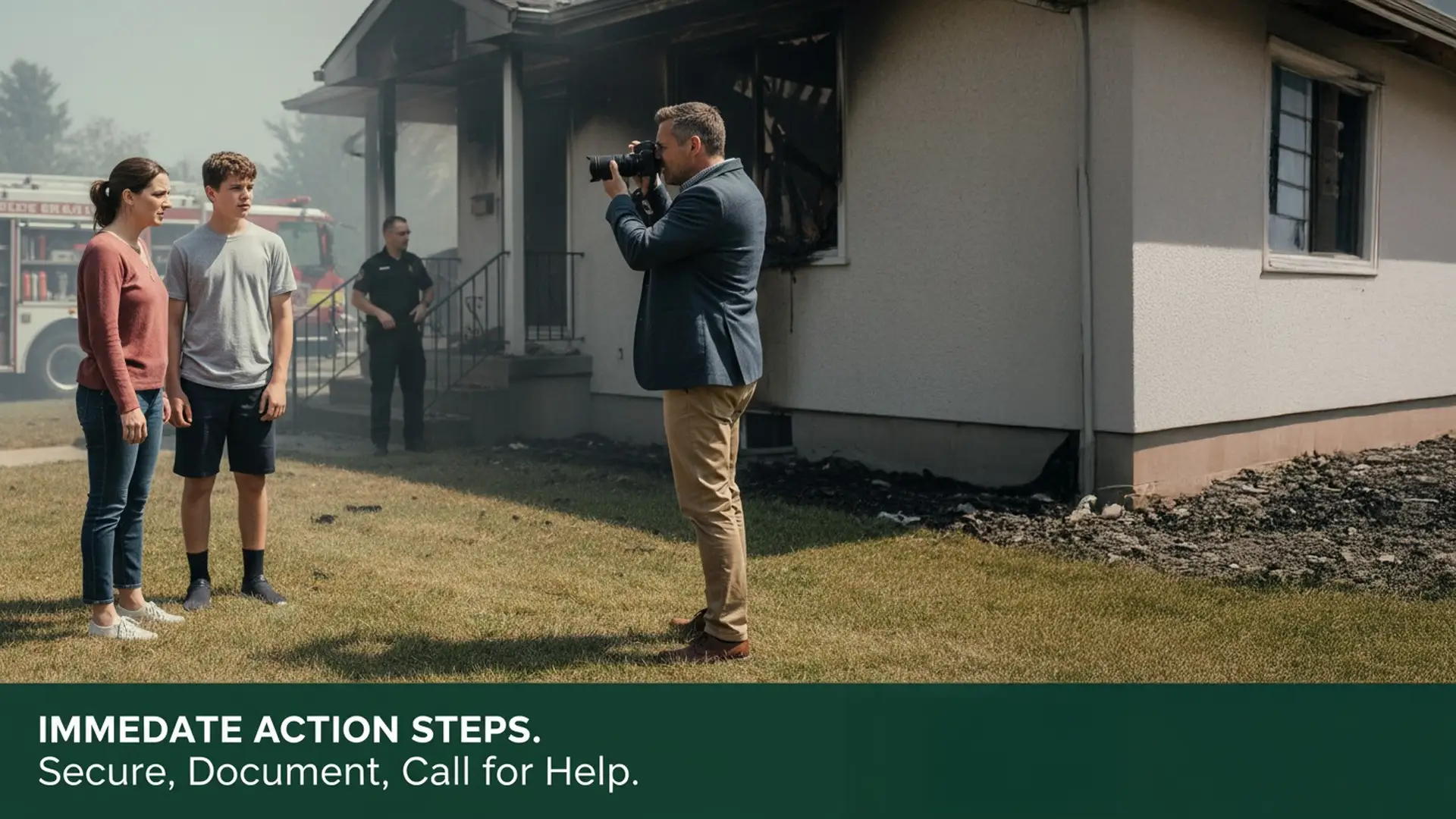
Your actions in the first 72 hours after a fire matter both for your family’s safety and for how your claim is assessed. For a detailed guide, see our article on what to do after fire damage to your home.
Immediate Actions After Fire Damage (First 24 Hours)
1. Ensure Safety First: Evacuate everyone immediately. Don’t re-enter for any reason, even valuable possessions.
2. Call Emergency Services: 999/112 for fire, police, ambulance as needed. Wait for official clearance.
3. Document All Damage: Photograph fire, smoke, and water damage from multiple angles. Take plenty of photographs.
4. Contact Insurance Company: Report the fire as soon as possible, as your policy requires. Obtain a claim reference number. Answer the insurer’s questions fully and accurately.
5. Secure Property: Board windows, cover roof holes, lock entry points. Document security measures.
6. Contact Loss Assessor: Contact us at the same time as you notify your insurer if you would like help with the claim.
Safety considerations must come first in every fire situation. Evacuate everyone immediately and don’t re-enter the building for any reason. Call 999 for emergency services and wait for official clearance before accessing your property.
Documentation should begin as soon as safely possible because preserved evidence is what supports every part of the claim. Photograph all damage from multiple angles. Include fire damage, water damage from firefighting efforts, and smoke contamination throughout the house.
Professional Help vs DIY Claims
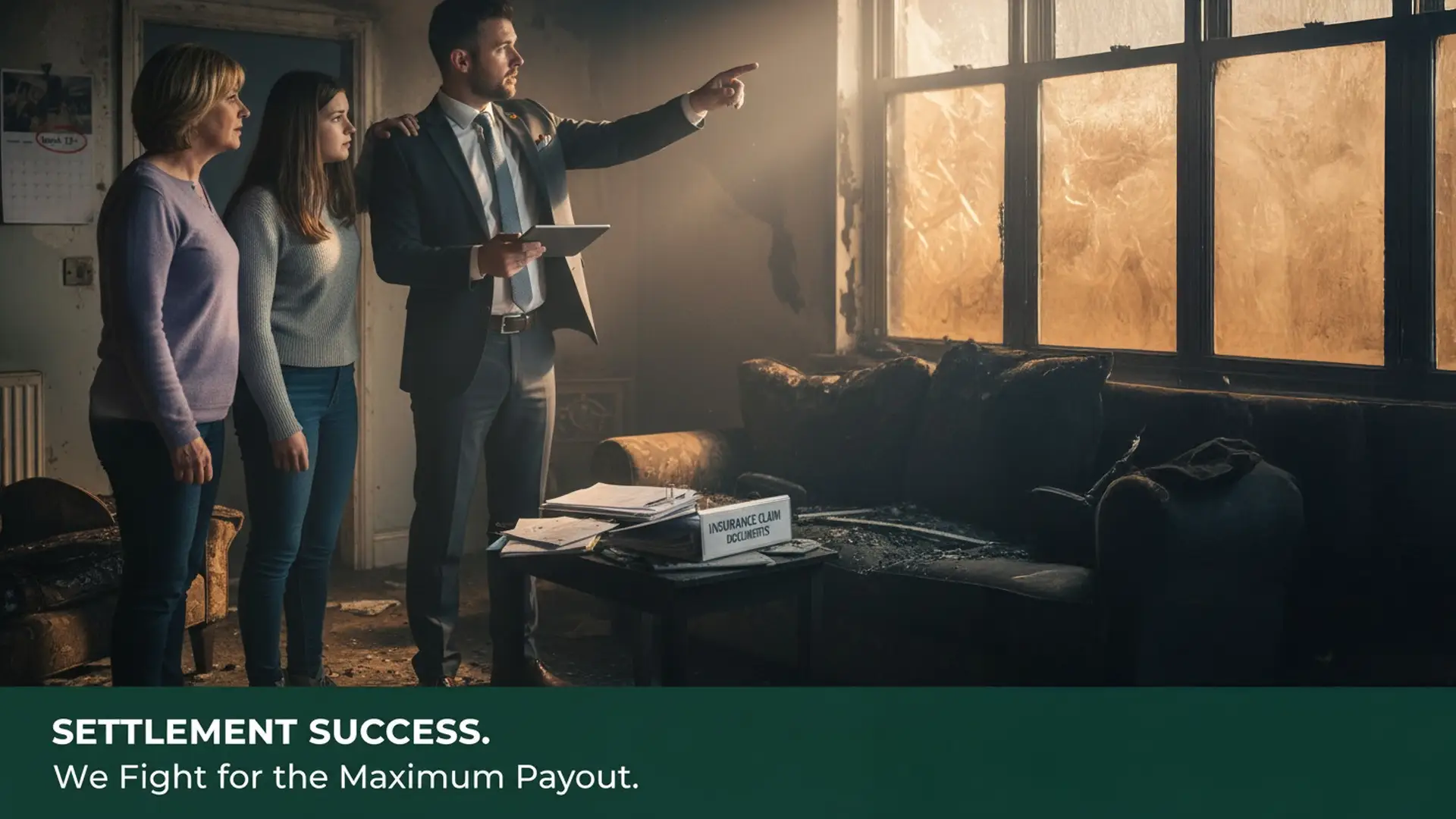
A professional loss assessor specialises in representing homeowners during insurance claims. They understand documentation requirements, policy interpretation, and how to negotiate with insurers.
Early professional involvement can help you avoid costly mistakes. Learn more about how loss assessors can help.
DIY claims can be challenging because homeowners may lack technical knowledge about construction costs, policy terms, and negotiation strategies. A loss assessor can document the damage and present it under your policy.
Common Fire Damage Claim Mistakes to Avoid
Understanding common insurance claim questions and avoiding frequent mistakes keeps your claim on a sound footing.
Documentation Gaps That Weaken a Claim
Insufficient photographs can’t prove damage extent. Incomplete inventories can’t support replacement costs. Missing receipts can’t establish ownership values. Use our ultimate insurance claim checklist to stay organised.
Understanding how to deal with insurance adjusters after a house fire begins with proper documentation. Clear, professional evidence makes each item easier to agree and leaves less room for dispute.
Premature Cleanup Destroys Evidence
Instincts encourage cleaning up and moving forward after fires. However, disposing of damaged items before professional evaluation can make it hard to prove what was lost. An item thrown out without a photograph or record is difficult to include in the claim.
Wait for official clearance from adjusters before discarding anything. Photograph items before disposal. Keep samples of damaged materials for evidence.
Accepting First Settlement Offers
A first offer is not always the final figure. Where an offer leaves out damage or costs your policy covers, those points can be raised with the loss adjuster and backed up with evidence.
A loss assessor can review whether an offer reflects the losses and policy benefits you have documented.
Fire Safety and Insurance Compliance
Preventing a fire is far better than claiming for one. Proper safety compliance also protects your insurance coverage if fires occur despite your best efforts.
Smoke and Heat Alarms
Fit smoke alarms on every level of your home and a heat alarm in the kitchen, and test them regularly.
Some policies include conditions about smoke alarms and maintenance. Check your policy wording so you know what it requires. Document all testing and maintenance activities.
Maintenance That Supports Insurance Claims
Regular chimney cleaning helps to reduce the risk of fires and creates documentation for insurance purposes. Electrical system inspections identify hazards and demonstrate responsible homeownership. Boiler servicing ensures heating equipment operates safely.
Keep all maintenance certificates and service records. Insurance companies review these documents during claim investigations. Keeping maintenance records helps if your insurer asks about the property.
Frequently Asked Questions About Fire Damage Claims
How long do fire damage claims take to process in Ireland?
Timescales depend on the size and complexity of the claim. A small claim may be dealt with in weeks, while a major loss can take many months. Learn more about how long it takes to settle a claim.
Do I need receipts for everything damaged in the fire?
Receipts help establish value, but aren’t always required. Credit card statements, bank records, warranty documentation, and photographs can prove ownership. Maintaining a home inventory before incidents makes claims much smoother.
Will my home insurance premiums increase after a fire claim?
Many insurers review the premium at renewal after a fire claim, and the effect varies from one insurer and policy to the next. For a genuine fire loss, the cost of repairs is usually much greater than any change in premium, but check with your insurer or broker how a claim may affect your renewal.
Can I choose my own contractors for fire damage repairs?
Yes, you can select your own contractors. Insurance companies may have preferred networks, but you’re not required to use them. Obtain multiple estimates from reputable contractors who understand fire damage restoration requirements.
Can I reopen my fire damage claim for additional damage?
Time limits vary by insurer and policy terms, so check your policy or ask your insurer about reopening a claim for additional damage. Document newly discovered damage immediately and notify your insurer promptly.
Does smoke damage alone justify an insurance claim?
Smoke damage can be claimed for if your policy covers it. Smoke contamination can affect a whole house even when fire damage is confined to one room.
Emergency Contacts and Resources
Emergency Services
Fire, Police, Ambulance: 999 or 112
ESB Networks Emergency: 1800 372 999
Gas Networks Ireland Emergency: 1800 20 50 50
Insurance and Consumer Resources
Competition and Consumer Protection Commission: www.ccpc.ie
Central Bank of Ireland: www.centralbank.ie
Fire Safety Information: www.fireireland.ie
Get Professional Fire Damage Claims Help
Fire damage claims involve substantial financial stakes and complex technical requirements. Professional assistance can be helpful for homeowners facing these situations.
Client Review
“Trevor was extremely professional and secured a settlement that far surpassed our expectations. The stress was taken off our shoulders completely.” – Lydia M., Dublin
5-star Google Review | Read more client reviews
Insurance Claim Solutions has been handling property claims since 2009, and all of our assessors are surveyors. Our team understands both technical fire damage assessment and insurance industry procedures.
We manage the full claim for you, including detailed damage documentation, policy analysis and interpretation, settlement negotiation, and ongoing communication with insurance companies throughout the process.
In practice, that means we record the damage, check the parts of your policy that may apply, set out the evidence and deal with the insurer and its loss adjuster on your behalf.
Get Expert Fire Damage Claim Help
Free Initial Consultation | No Win No Fee
This article provides general guidance about fire damage claims in Ireland based on our professional experience. For advice specific to your situation, contact our qualified loss assessors for a free consultation.