
Hello, I’m Trevor Kelly of Insurance Claim Solutions. Storms such as Storm Éowyn in January 2025 left many homeowners across Ireland dealing with damaged roofs, fallen trees and water getting into their homes. So, can you claim on your home insurance for storm damage? Generally yes, but what is covered depends on your policy wording. Here is what you need to know.
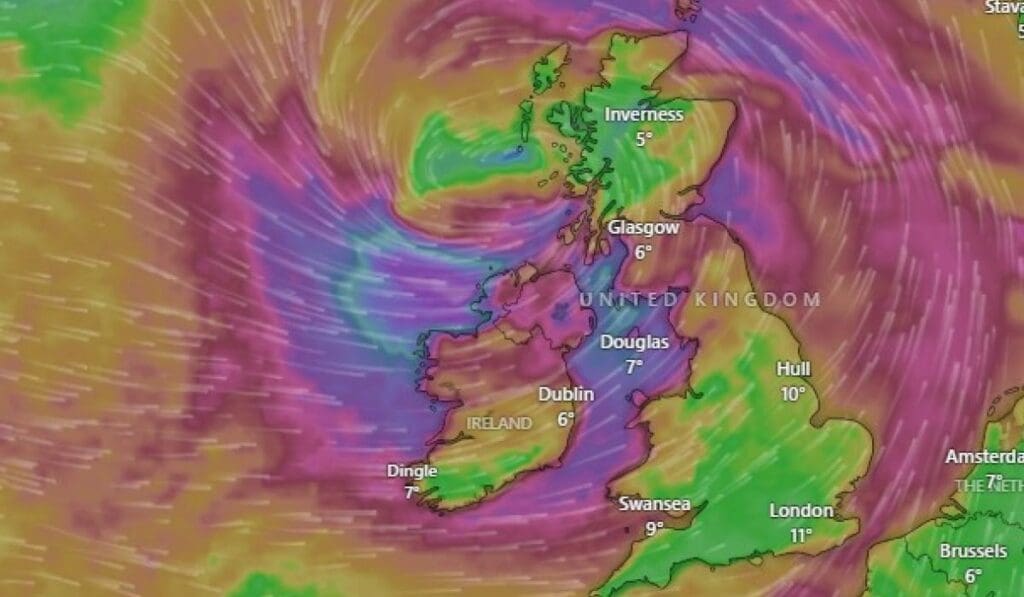
Storm Damage Cover in Ireland
Most Irish home insurance policies include cover for storm damage. This usually means damage caused by a storm event, such as high winds or storm-driven rain, rather than ordinary bad weather. Check how your own policy describes storm cover.
What Is Often Covered
Depending on your policy, storm cover may include:
- Damage from falling trees, branches, aerials, masts and satellite dishes
- Water damage from wind-driven rain entering through storm damage
- Structural damage caused by high winds, such as damaged roofs, windows and doors
- Reasonable temporary repairs to prevent further damage
- Alternative accommodation if your home cannot be lived in
Common Exclusions and Limits
Not all storm-related damage is automatically covered. Points to check in your policy include:
- Gates, fences and hedges: storm damage to these is often excluded or limited unless your policy specifically includes it.
- Wear and tear: gradual deterioration, such as a roof leaking because of age, is usually excluded.
- Faulty workmanship: damage caused by poor workmanship or defective materials is typically not covered.
- Vehicles: damage to cars is normally a matter for your motor insurance, not your home insurance.
- Excess: you pay the excess on each claim, so damage costing less than the excess cannot be claimed.
- Flooding: flooding from rivers, the sea or rising groundwater may be excluded or limited, particularly in areas identified as high flood risk. Flood cover is dealt with separately from storm cover in many policies.
- Subsidence: cover for subsidence and ground movement, and the excess that applies, varies between policies.
- Items outside: property kept outside the house may not be covered unless your policy says so.
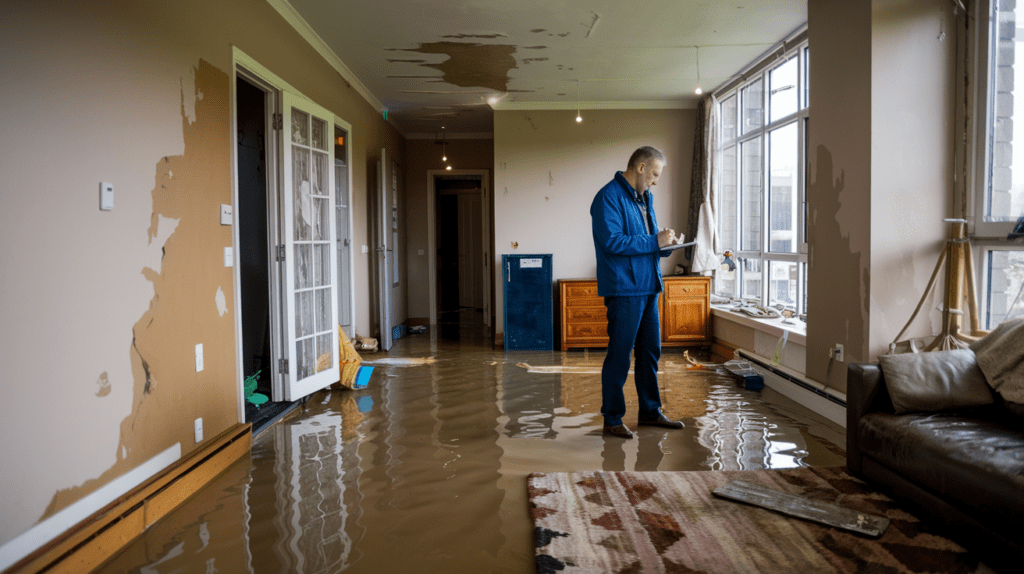
Types of Storm Damage
- Wind damage: strong winds can lift slates and tiles, damage roofs and chimneys, and break windows. Wind can also drive rain in through gaps and cause debris to strike the building.
- Rain damage: heavy, wind-driven rain can cause leaks and damp. Insurers will look at whether the roof was well maintained. See our guide to water damage claims.
- Storm-related flooding: where rainwater gets in because a storm has damaged the building, this is usually assessed under storm cover. Flooding from rivers, the sea or groundwater is treated differently. See our flood damage guide.
- Falling trees and debris: damage from falling trees and branches is commonly covered. See can I claim on insurance for a fallen tree.
- Broken windows and doors: flying debris can break glazing and doors, letting in wind and rain and leaving the property less secure.
- Lightning: lightning can cause fire and damage electrical systems. Read more about lightning damage.
Underinsurance and the Average Clause
Underinsurance is a common problem. If the sum insured on your buildings policy is lower than the real cost of rebuilding your home, you may not be fully covered. Many policies also contain an average clause, which can reduce a claim in proportion to the underinsurance. For example, if your home would cost €200,000 to rebuild but is insured for €100,000, a claim could be reduced by half. The exact effect depends on your policy wording. You can learn more about the risks of underinsurance here. Rebuildvaluation.ie, a separate related business, provides building insurance valuations.
What to Do After Storm Damage
- Stay safe: check for hazards such as fallen power lines, loose slates or unstable structures. Don’t go onto the roof yourself.
- Document the damage: once it is safe, take clear photographs and video of all affected areas, both close-ups and wider shots.
- Prevent further damage: make reasonable temporary repairs, such as covering broken windows or getting a tarpaulin fitted over a damaged roof. Keep the damaged materials and the receipts.
- Notify your insurer: contact your insurer as soon as possible. Your policy will usually require you to report damage promptly. The contact details are in your policy documents.
- Complete the claim forms accurately: give full and accurate information that matches your evidence.
- Keep records: keep copies of all correspondence and receipts for emergency repairs and any temporary accommodation.
Proving the Damage Was Caused by a Storm
As the policyholder, it is generally up to you to show that the damage was caused by an insured event. Useful evidence includes photographs and video, weather data for your area on the date (for example from Met Éireann), and, where needed, a report from a surveyor or other expert.
The Loss Adjuster’s Visit
Your insurer may appoint a loss adjuster to inspect the damage and assess the claim on the insurer’s behalf. If the claim is accepted, the insurer will settle it according to the terms of your policy. Check with your insurer before permanent repairs begin. For more on the process, see how to claim on home insurance.
Why Storm Claims Can Be Declined
- Pre-existing problems: if the damage is found to come from an existing defect or lack of maintenance, such as an old roof leak or blocked gutters, the claim may be declined or reduced.
- Negligence: for example, damage caused by leaving windows or doors open during a storm. Insurers expect you to take reasonable precautions.
- Excluded causes: some policies treat flooding and rainwater damage differently, so a claim for an excluded cause, such as rising groundwater, may be declined.
- Late notification: delaying your report can make a claim harder to assess.
- Missing evidence: disposing of damaged items before they are photographed or inspected makes it harder to prove your loss.
If your claim is declined, ask the insurer to explain the reasons in writing and to point to the policy wording it is relying on.
Preparing Your Home Before a Storm
- Check that roof slates and tiles are secure and that gutters and drains are clear.
- Have overhanging tree branches cut back.
- Bring in or tie down garden furniture and other loose items.
- Close and lock windows, doors and gates.
- Keep important documents somewhere safe and above floor level.
- Charge your phone and keep your insurer’s claims number to hand in case of power cuts.
- If you live in a flood-prone area, check for flood warnings and consider flood barriers.
- Review your sum insured regularly, as rebuilding costs change.
During a storm, stay indoors and follow official weather warnings. Only take steps to protect your property if it is safe to do so.
If You Can’t Live in Your Home
If storm damage leaves your home uninhabitable, many policies include cover for alternative accommodation, such as hotel or rental costs, while repairs are carried out. Check your policy for the limits and conditions, and keep all receipts.
How a Loss Assessor Can Help
The loss adjuster is appointed by your insurer. A loss assessor is appointed by you and acts for you, the policyholder. We can:
- Assess and record the damage
- Review your policy wording
- Prepare and submit your claim, including the claim forms
- Deal with the insurer and its loss adjuster on your behalf
- Cost the repairs covered by your policy, with supporting estimates
To find out more, read what a loss assessor does.
About Insurance Claim Solutions
Trevor Kelly Insurance Claim Solutions Limited, trading as Insurance Claim Solutions, is regulated by the Central Bank of Ireland (Reg. No. C423441). We are not an insurer; we work for the policyholder. You can read more about our services here.
Your Rights and Complaints
Insurers in Ireland are regulated by the Central Bank of Ireland, and consumers have protections under the Consumer Insurance Contracts Act 2019. If you disagree with a decision on your claim, you can use your insurer’s complaints process. If that does not resolve it, you may be able to refer the complaint to the Financial Services and Pensions Ombudsman.
Frequently Asked Questions
What is a policy excess?
The excess is the amount you pay towards each claim, and it is set out in your policy schedule.
Does home insurance cover lightning damage?
Most Irish home policies include lightning damage, but check your policy.
What if my roof was already old or partly damaged?
Policies generally do not cover wear and tear or pre-existing defects. If the storm caused new and distinct damage, that damage may still be covered. Where old and new damage overlap, the position can be complex.
Does my insurance cover flooding?
It depends on your policy and where you live. Flooding from rivers, the sea or groundwater may be excluded or limited, especially in high-risk areas. Rainwater getting in because a storm damaged your home is usually assessed under storm cover.
How long do I have to make a claim?
Most policies require you to notify the insurer promptly, and some set a specific time limit. Check your policy and report the damage as soon as you can.
Will my premium go up after a claim?
It may. This depends on your insurer, the size of the claim and your claims history.
Do I need a loss assessor?
It is your choice. Some policyholders appoint a loss assessor for larger or more complex claims so that someone acts on their behalf.
What if I disagree with my insurer’s assessment?
Ask for the reasons in writing. You can provide your own evidence, such as a report from a surveyor or contractor, or appoint a loss assessor. You can also use your insurer’s complaints process and, if needed, the Financial Services and Pensions Ombudsman.
If you have storm damage and would like to talk it through, contact Insurance Claim Solutions on 01 870 9210. Your initial consultation is free. You can learn more about our claim help here.
This article is general information only and is not advice on your specific policy. Cover depends on your policy wording.