

Welcome to your comprehensive guide to subsidence damage and home insurance claims in Ireland. We understand that discovering subsidence in your home can be unsettling. This guide provides clear, accurate information to help you navigate the complexities of subsidence, from identifying the initial signs to making your insurance claim. Our aim is to empower you with the knowledge you need to protect your property and your peace of mind.
Understanding Subsidence Damage
What is subsidence?
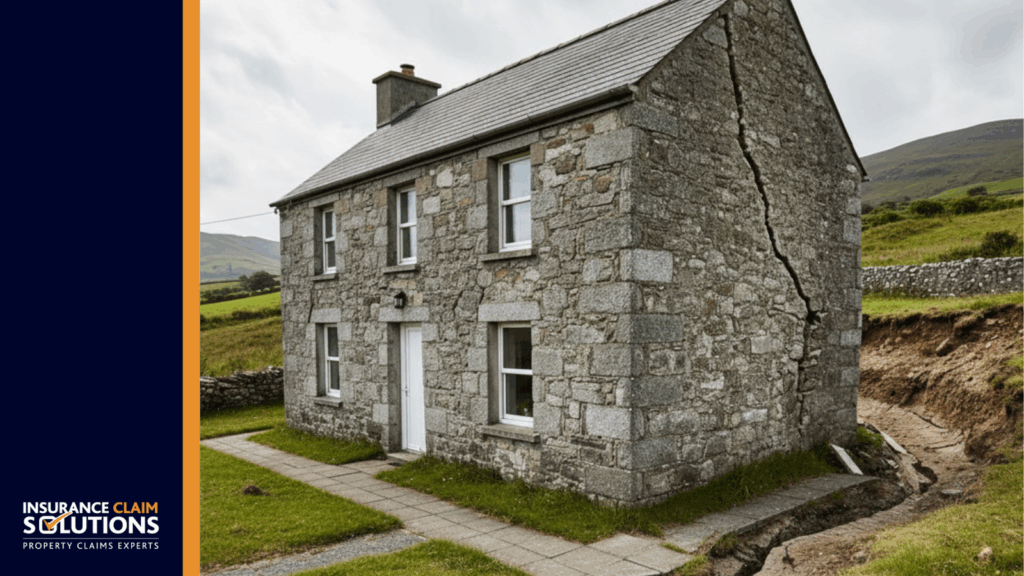
Subsidence refers to the downward movement of the ground beneath a property’s foundation. This movement can cause structural damage, leading to cracks in walls and other visible problems. It’s essential to understand that subsidence differs from normal settlement, which occurs naturally as a building ages. Settlement typically causes minor, hairline cracks that stabilise over time. Subsidence involves ongoing ground movement that can lead to significant structural issues if left unaddressed.
Common signs of subsidence damage
Identifying the early signs of subsidence is crucial for preventing more serious structural problems. Several indicators can help you spot potential issues before they become major concerns.
Key warning signs include:
- New cracks appearing in walls, especially those wider than 3mm (about the thickness of a €1 coin)
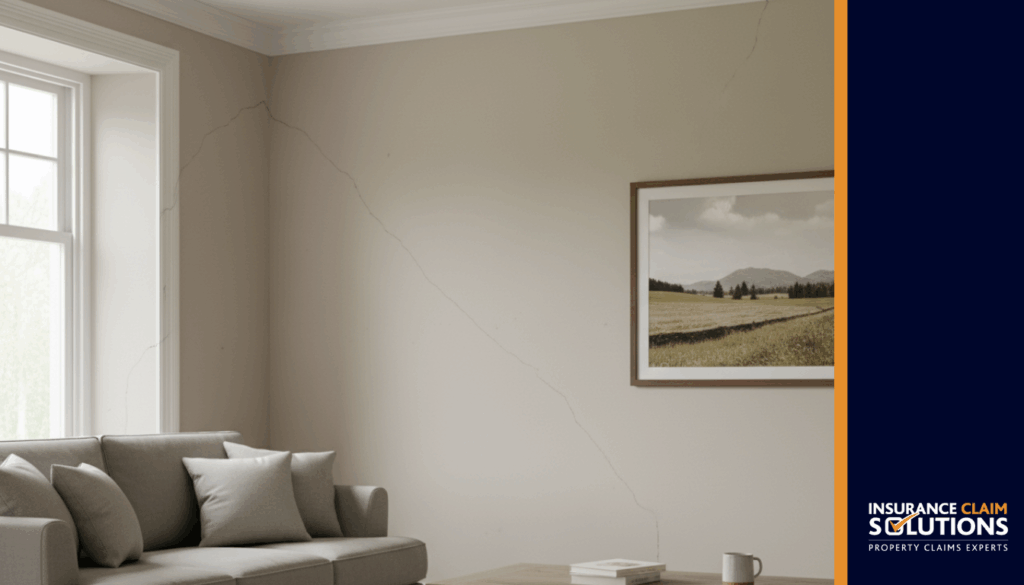
- Diagonal cracks that are wider at the top than at the bottom, typically around doors and windows
- Doors and windows that suddenly become difficult to open or close
- Gaps appearing between walls and ceilings or between walls and floors
The most telling sign is diagonal cracks that run at roughly 45-degree angles, typically found around door frames and window openings. These cracks are usually wider at the top than at the bottom, following the direction of the ground movement beneath. Other visual cues include leaning or bulging walls, floors that slope noticeably, and distortions in the building’s overall structure.
If you observe these signs, it’s time to investigate the potential causes and consider consulting a professional. Early intervention can prevent minor subsidence from developing into a major structural problem requiring extensive repairs.
Causes of Subsidence in Irish Properties
Natural causes
Clay soil is a natural cause of subsidence. Clay expands when wet and contracts when dry, creating a cycle of movement that can destabilise foundations over time. During prolonged dry periods, clay soil shrinks as moisture evaporates, causing the ground beneath your home to sink.
Tree roots are another significant natural cause. Large trees near your property draw substantial amounts of moisture from the soil, especially during dry spells. This moisture extraction causes the surrounding soil to shrink, potentially leading to subsidence. Mature trees like oak, willow, poplar, and elm are particularly thirsty and can affect soil up to a distance equal to their full height from your property.
Human-induced causes
Leaking drains are a human-induced cause of subsidence. When drainage pipes crack or joints fail, water escapes and gradually washes away the soil supporting your foundation. This erosion creates voids beneath the building, leading to subsidence as the ground can no longer support the structure’s weight.
Nearby construction work can also trigger subsidence. Excavations for new buildings, road works, or utility installations can disturb the ground and affect neighbouring properties. Heavy machinery and pile driving create vibrations that can compact or shift soil, whilst deep excavations can alter groundwater levels and drainage patterns.
Making a Claim for Subsidence Damage

The subsidence insurance claims process
Start by reporting the signs of subsidence to your insurer as soon as you suspect a problem. Most policies require prompt notification. When you make initial contact, provide your policy number and a factual description of what you’ve observed, including when you first noticed the problem.
Your insurer will then appoint a loss adjuster to investigate the claim. The loss adjuster is appointed by the insurance company and will visit your property to assess the damage. They’ll examine the cracks, review the property’s history, and may commission additional reports from structural engineers or drainage specialists.
The length of the investigation varies. The insurer needs to establish that genuine subsidence has occurred, identify the cause, and determine whether it falls within your policy coverage. Once the investigation is complete and the claim is accepted, the insurer will discuss repair options and costs.
Documentation needed for your insurance claim
Thorough documentation helps you to present your subsidence claim and can help to avoid disputes with your insurer. Start gathering evidence as soon as you notice potential problems.
Essential documentation includes:
- Detailed photographs of all cracks, taken from multiple angles and with measurements for scale
- Written notes about when you first noticed each crack and whether they’ve grown
- Any previous surveys or structural reports for the property
- Records of recent drainage work or nearby construction activity
Keep copies of all correspondence with your insurer, including emails, letters, and notes from phone conversations. Record the date, time, and name of anyone you speak with, along with a summary of what was discussed.
Working with a loss assessor
Engaging a professional loss assessor can be beneficial when navigating a complex subsidence insurance claim. Unlike the loss adjuster appointed by your insurance company, a loss assessor acts for you, representing your interests throughout the claims process.
All of our assessors are surveyors, so they can look at both the technical aspects of structural damage and the insurance policy. We deal with your insurance company on your behalf, record the damage and review the repair solutions that are proposed.
Home Insurance and Subsidence Claims

Understanding your home insurance policy
Many Irish home insurance policies include subsidence cover, but there are important variations. Review your policy documents carefully to understand exactly what’s covered. Look for the specific definition of subsidence used in your policy, as some insurers define it narrowly to exclude certain types of ground movement.
Pay particular attention to policy exclusions. Many policies exclude subsidence caused by coastal erosion, mining activity, or defective construction. If you are unsure of the cause of cracking, tell your insurer what you have observed and ask how it is treated under your policy. Check your policy excess for subsidence claims, which can be higher than for other types of damage.
What to expect from your subsidence insurance claim
When you make a subsidence insurance claim, expect a thorough and often lengthy investigation. Insurers take subsidence claims seriously because repair costs can be substantial.
The investigation typically begins with a site visit from the insurer’s loss adjuster, followed by a structural engineer’s report. Many insurers then require a monitoring period to track whether the movement is ongoing or has stabilised. Timescales vary, and the process can be lengthy.
Repairing and Preventing Subsidence
Fixing subsidence: underpinning and other methods
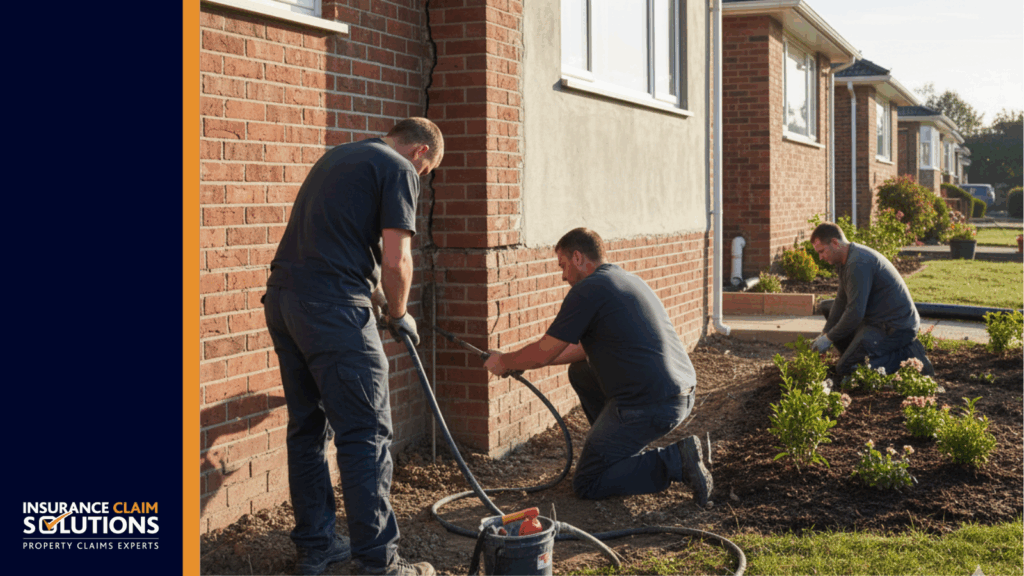
Underpinning is one repair method. This involves strengthening the foundation by excavating beneath it in sections and extending it deeper into more stable ground. Traditional mass concrete underpinning creates a new, deeper foundation that reaches soil layers unaffected by moisture changes. Whilst effective, underpinning is expensive and time-consuming.
Resin injection offers a less invasive alternative in some cases. This involves injecting expanding resin into the soil beneath the foundation, which fills voids and compacts loose soil. Addressing the root cause is often sufficient to stop subsidence without extensive foundation work. If a leaking drain caused the problem, repairing the drain may be all that’s needed.
Preventing future subsidence issues
Maintain your drainage systems properly. Have your drains inspected regularly and address any leaks immediately. Keep gutters and downpipes clear and in good condition, ensuring rainwater is directed away from the building.
Be thoughtful about trees near your property. As a general rule, don’t plant large trees closer to your building than their mature height. Monitor your property regularly for early warning signs, particularly after prolonged dry spells or heavy rain.
The Impact of Subsidence on Property and Insurance
How subsidence affects property value
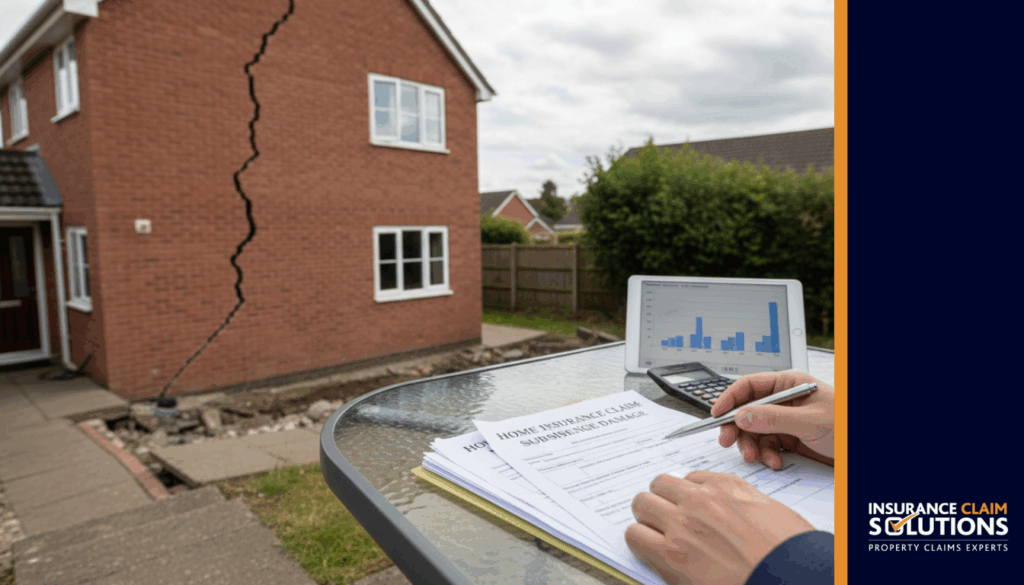
A property currently experiencing subsidence may see a reduction in market value, and some lenders may be reluctant to lend on a property with active subsidence. A history of subsidence can also be taken into account by buyers and lenders.
Understanding insurance implications
Making a subsidence claim may affect your future insurance premiums or the terms on which cover is offered, and the effect varies between insurers. Ask your insurer or broker how a claim may affect your renewal.
Getting Professional Help with Subsidence Claims

At Insurance Claim Solutions, we act for Irish homeowners and businesses on subsidence claims throughout Ireland.
All of our assessors are surveyors, and we have handled property claims, including subsidence claims, since 2009. We deal with your insurer and its loss adjuster on your behalf.
If you’re concerned about subsidence in your property or need help with an existing claim, contact us for a free initial consultation. We work on a no win no fee basis. Call 01 870 9210 or email info@insuranceclaimsolutions.ie.
Key Takeaways About Subsidence
Subsidence is serious, but understanding it helps you respond effectively. Watch for diagonal cracks wider than 3mm, doors and windows that stick, and any gaps appearing around your foundation. If you spot these signs, act quickly.
Many policies cover subsidence, but cover varies significantly between insurers, so check your policy. Read your policy carefully, understand your excess, and know what’s excluded. The claims process for subsidence can be lengthy.
Prevention is always better than cure. Maintain your drainage systems, be thoughtful about trees near your property, and monitor regularly for early warning signs. If you’re dealing with subsidence, professional help is available.
Dealing with subsidence damage? Insurance Claim Solutions acts for policyholders on subsidence claims throughout Ireland. Contact us on 01 870 9210 or email info@insuranceclaimsolutions.ie.