
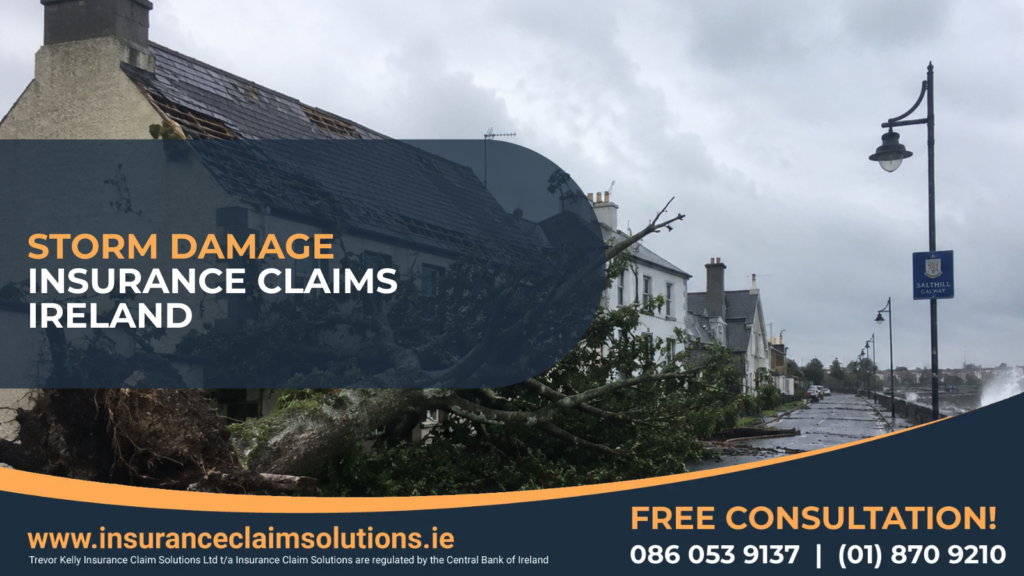
Your roof took a hit in last night’s storm. Slates are off, water is coming in, and your first instinct is to ring your insurer and report it. That is a natural reaction, and prompt notification is usually required under your policy.
But after a major storm, claims teams can be stretched quickly. Inspections may take time, evidence can be lost, and the way the damage is documented from the outset can shape how the claim is assessed.
Does Home Insurance Cover Storm Damage in Ireland?
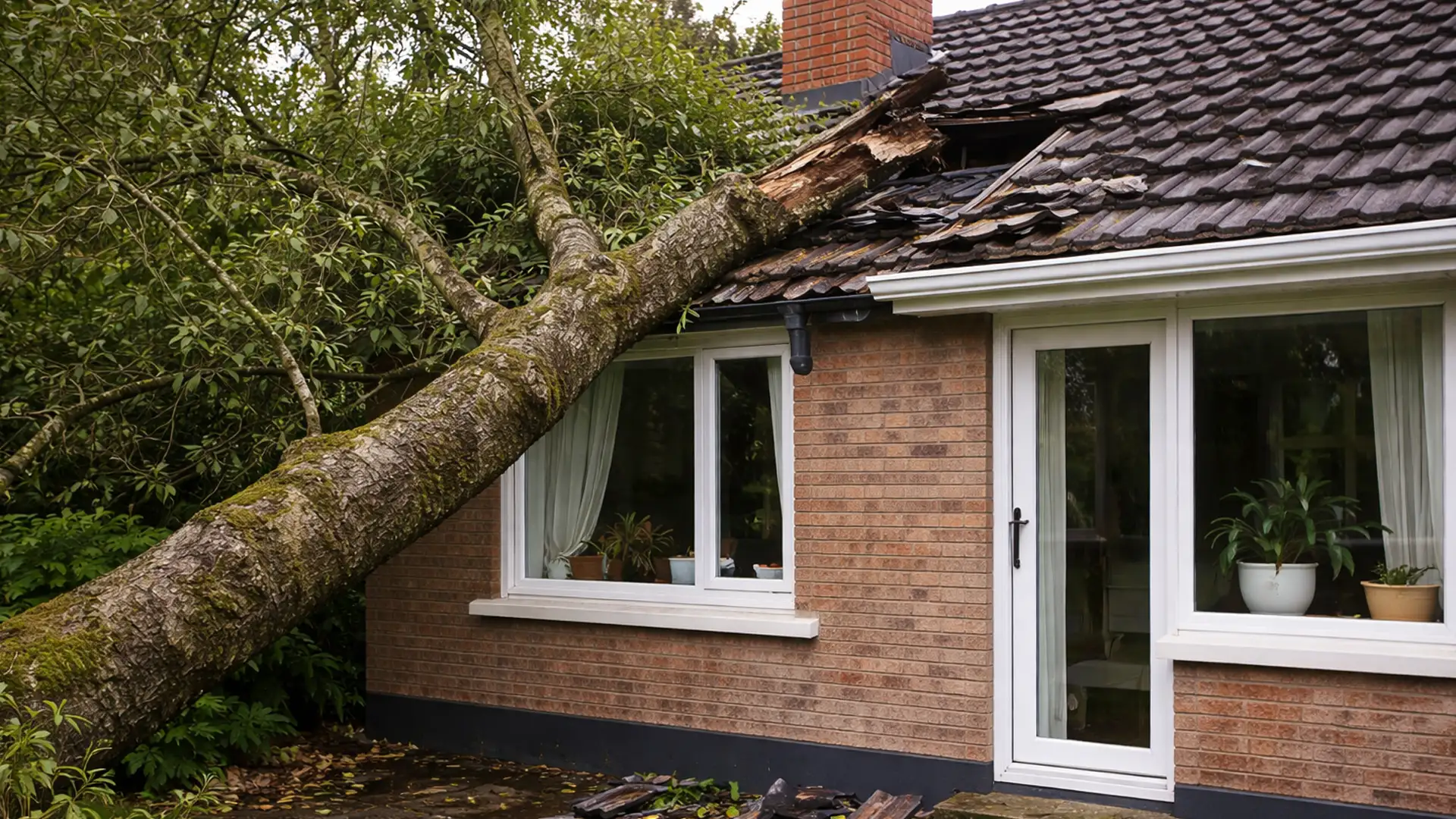
Most standard home insurance policies in Ireland cover sudden and unexpected damage caused by severe weather. High winds, heavy rain, hail, falling trees, and flying debris are all typically covered events. Where the damage is clearly caused by an insured storm event, the policy may respond, subject to the policy wording, exclusions, excesses and evidence available.
The key word is sudden. Irish home insurance policies cover storm events. They do not cover gradual deterioration, wear and tear, or pre-existing defects that the storm simply exposed. That distinction matters a great deal in practice, because it is a common basis on which storm damage claims can be disputed or reduced.
Structural damage to your roof, chimney, rain gutters, and external walls is generally covered, subject to the terms of your policy. Water damage flowing from storm damage is usually covered too, including secondary damage to ceilings, insulation, and internal finishes, provided rain or flood water entered through a breach the storm created. Emergency repairs to prevent further loss may be claimable, provided they are necessary, proportionate, documented and supported by receipts.
What may not be covered, or may be limited, includes damage to garden fencing, gates, sheds, outbuildings, pre-existing maintenance issues, and flooding that falls under a separate flood clause. Always check the specific policy wording.
Wear and Tear: Why Storm Claims Can Be Disputed
After major weather events in Ireland, such as Storm Éowyn, Storm Darragh, and Storm Ophelia, insurers face a high volume of claims in a short window. One of the key issues they must assess is whether the damage was caused by the storm itself or by pre-existing wear and tear, gradual deterioration or poor maintenance. This distinction matters because most policies cover sudden insured events but exclude damage that developed gradually over time.
The insurer’s loss adjuster will note the age of the roof, the condition of surrounding tiles, and any evidence of nail rot or old flashing repairs. They may reference Met Éireann weather data or other local weather evidence when assessing whether the conditions at or near your property were consistent with storm damage.
Applying policy exclusions is a normal part of assessing a claim, and you may need to show that the damage was caused by the storm, which can take more than photographs and a builder’s opinion. A roofer’s invoice may confirm what needs to be repaired, but it may not deal with causation, timing or whether the damage is consistent with a sudden storm event rather than gradual deterioration.
Trevor Kelly of Insurance Claim Solutions is a qualified Chartered Building Surveyor as well as a public loss assessor. A building surveyor can assess whether damage is consistent with an acute weather event or with gradual deterioration, and can document that assessment for the insurer.
What Qualifies as Storm Damage Under an Irish Insurance Policy
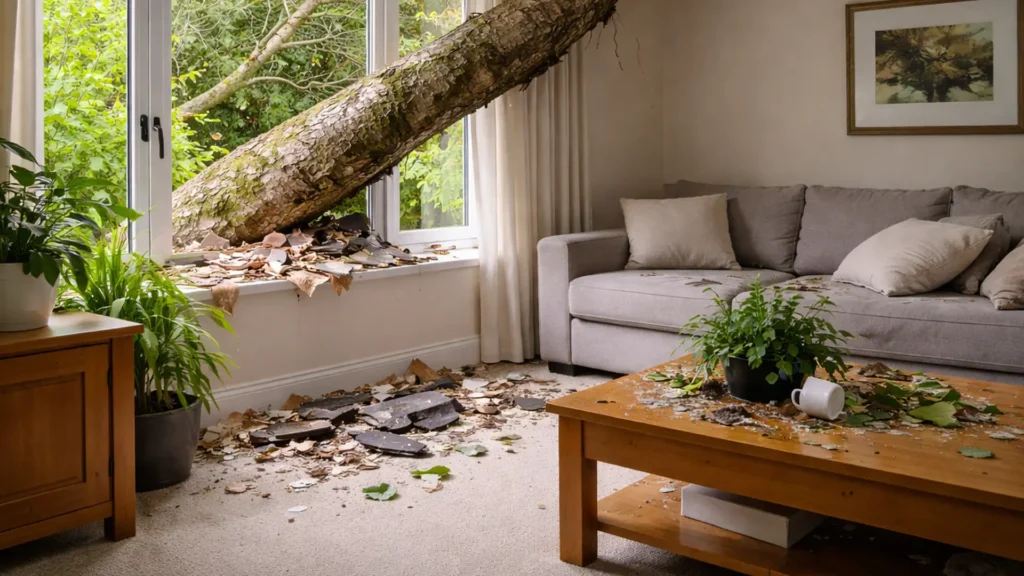
Policies differ, but storm damage is usually assessed by looking at the policy definition of storm, the weather conditions at the time, the condition of the property, and whether the damage is consistent with a sudden weather event. Insurers may refer to Met Éireann data, local weather evidence, site evidence and professional reports when assessing the conditions at or near the property on the date of loss.
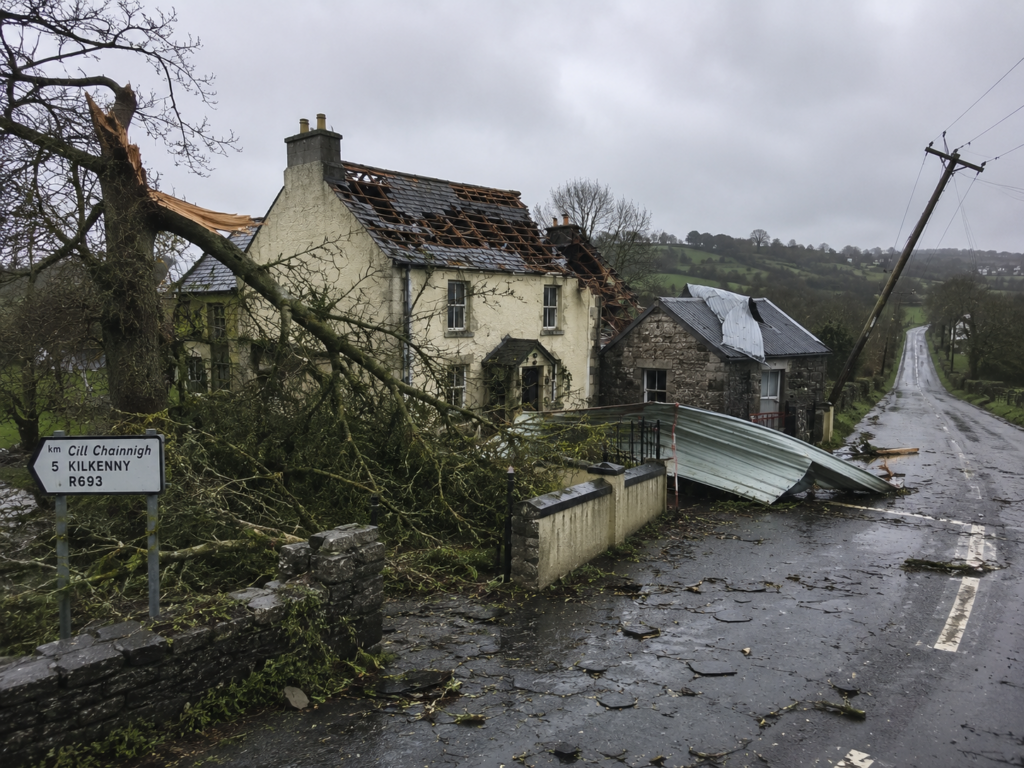
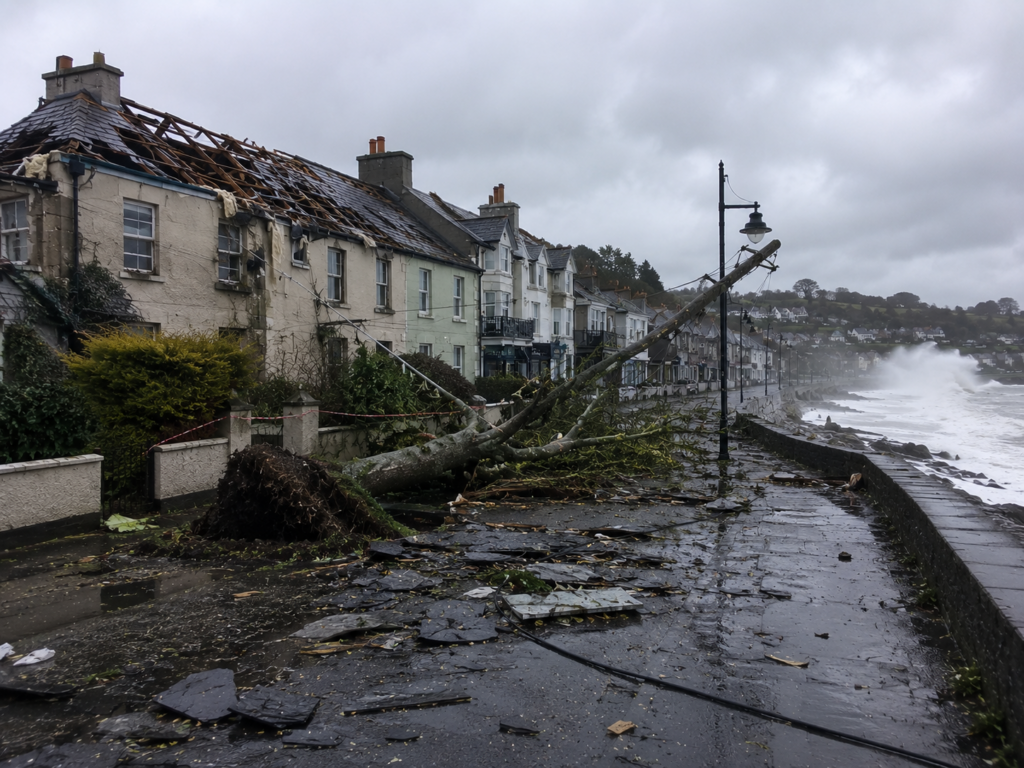
Roof damage is a common feature of storm claims. High winds lift or strip slates and tiles, damage ridge tiles, crack or displace flashing, and knock out fascia, soffits, and downpipes. Where wind compromises the roof structure and allows water ingress, the resulting water damage to ceilings, insulation, timber and internal finishes may be covered as a consequential loss, subject to policy wording and causation being accepted.
Chimneys take punishment in severe wind events. A cracked chimney stack, displaced pots, or partial structural failure can require significant reinstatement work. Where the cause is clearly the storm event, this is generally covered. Fallen trees and impact damage, broken windows, damaged walls, and structural impact from debris are normally covered events too, subject to the tree not having been in a visibly dangerous condition before the storm hit.
Rain gutters, boundary walls, and outbuildings are frequently caught by storm events. Gutters and downpipes are usually covered. Garden sheds and outbuildings typically are. Fencing and gates are a different matter, frequently excluded or subject to limits, so always check your specific policy wording.
Water damage following a storm needs particular attention. Where there is a clear causal chain between the storm event and water entering the property, wind lifts roof tiles, rain enters through the gap, a ceiling is damaged, and the resulting water damage forms part of the storm claim. Where water ingress is attributed to a pre-existing leak or blocked gutters that pre-date the storm, the insurer may dispute it. The distinction between storm-caused water damage and ongoing water damage from another source is contested territory in many claims.
What to Do in the First 24 Hours After Storm Damage
The actions you take immediately after a storm can affect how your claim is assessed.
Make the property safe before anything else. Stay away from damaged roof areas, unstable structures, and any electrical installations that may have been exposed to water or impact. Do not go onto a damaged roof yourself.
Document everything before you touch anything. Photographs and video of all visible damage, taken from multiple angles, are the most valuable evidence you will produce in the entire claim process. Wide shots to show context, close-ups to show specific damage points. Capture garden debris, fallen branches, and damage to neighbouring properties. This is your baseline. Once temporary repairs are made or debris is cleared, the baseline is gone, and it cannot be reconstructed.
For emergency temporary repairs, keep the scope narrow. Cover a damaged roof section with a tarpaulin. Board up broken windows. Take reasonable steps to prevent rain or weather getting further into the property. Keep every receipt. Check with your insurer before beginning permanent repairs. An insurer who has not yet inspected the property may be unable to verify damage that has already been repaired.
Notify your insurer as soon as possible, as your policy requires. You can contact Insurance Claim Solutions for advice at the same time.
Most policies require prompt notification and some set specific time limits, so check your policy wording. Hold on to damaged slates, guttering and contents until the loss adjuster has had a chance to look at them.
The Loss Adjuster and the Loss Assessor: Two Different Roles
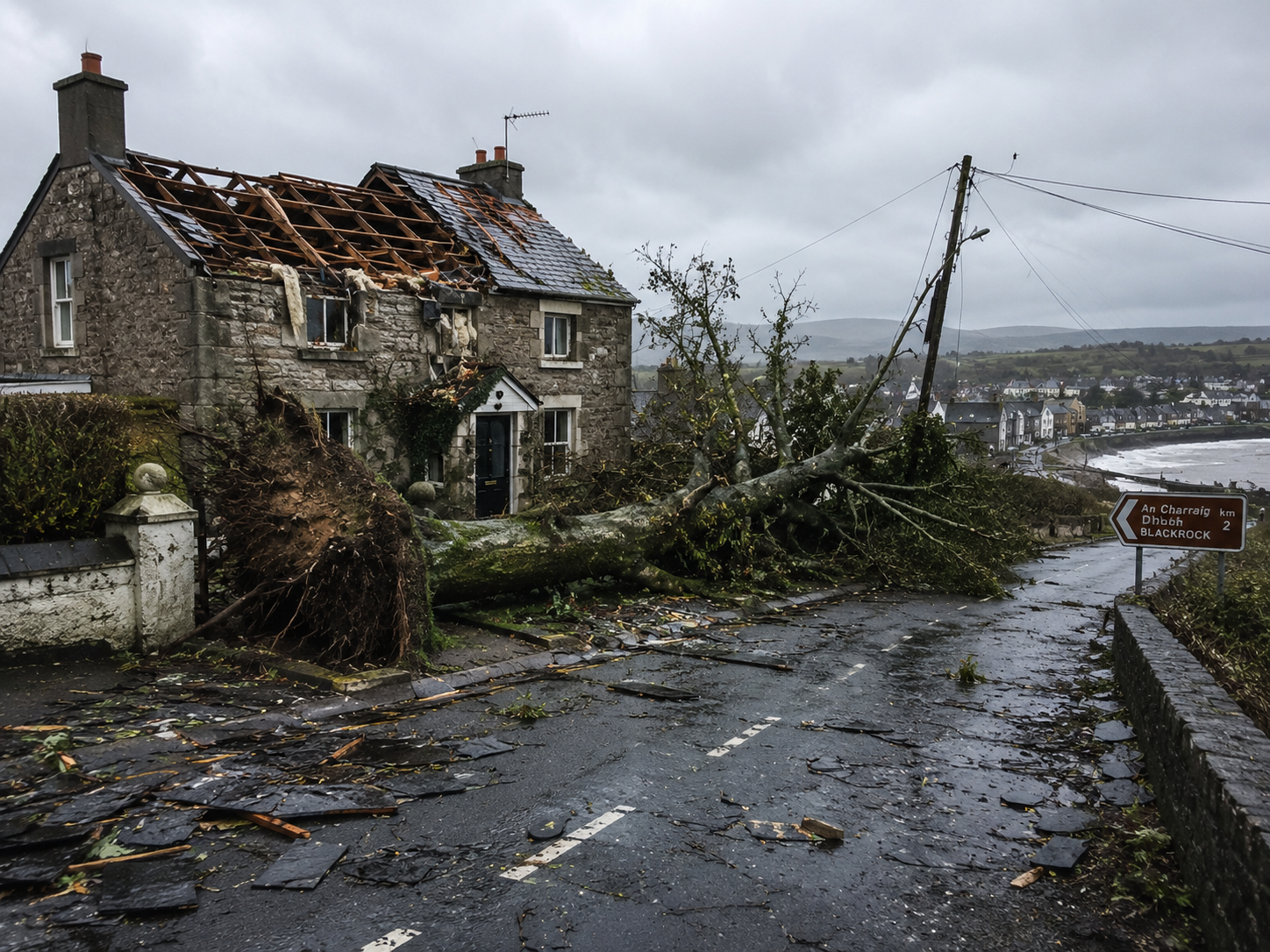
After you notify your insurer, they will appoint a loss adjuster to inspect your property. The loss adjuster is a qualified professional whose role is to assess the claim on the insurer’s behalf and to establish what is covered under your policy and at what cost.
Loss adjusters are not acting against you. But they are not working for you either. Their client is the insurer.
A public loss assessor acts on behalf of the policyholder. Insurance Claim Solutions takes over the entire claim management process, from the initial policy review and damage assessment through to the final settlement negotiation. Trevor Kelly inspects the property, records the damage, including structural issues that may not be immediately visible, prepares and presents the claim to the insurer, and deals with the insurer on your behalf.
In disputed or complex claims, differences can arise between the insurer’s initial assessment and the policyholder’s view of the full scope of loss, particularly where roof damage, structural issues, water ingress or causation are in dispute.
Insurance Claim Solutions operates on a no win no fee basis, and the initial consultation is free. Fee terms are agreed with you before we start.
Trevor Kelly’s Background as a Chartered Building Surveyor
Storm damage claims often require more than a visual assessment of obvious damage.
As a member of the Society of Chartered Surveyors Ireland (SCSI) and a Chartered Building Surveyor, Trevor’s building surveying background can help identify damage that may not be immediately obvious during an initial visual assessment. Storm events do not always announce their full effects immediately. A missing roof tile is obvious. The movement in the roof structure beneath it, the compromised timber, and the water path that has tracked along a rafter and is sitting above a ceiling: none of those may be visible at first glance.
Secondary damage can surface during reinstatement, so it is useful to record structural damage as fully as possible at the outset.
It also matters when disputes arise over causation. Wear and tear issues often arise in roof claims, precisely because the condition of a roof is difficult for a homeowner to assess or document. A building surveyor can determine, from the nature and distribution of the damage, whether what occurred is consistent with an acute high-wind event or with gradual deterioration. That professional assessment can be set out in a report for the insurer.
Storm Damage Claims for Businesses and Commercial Properties
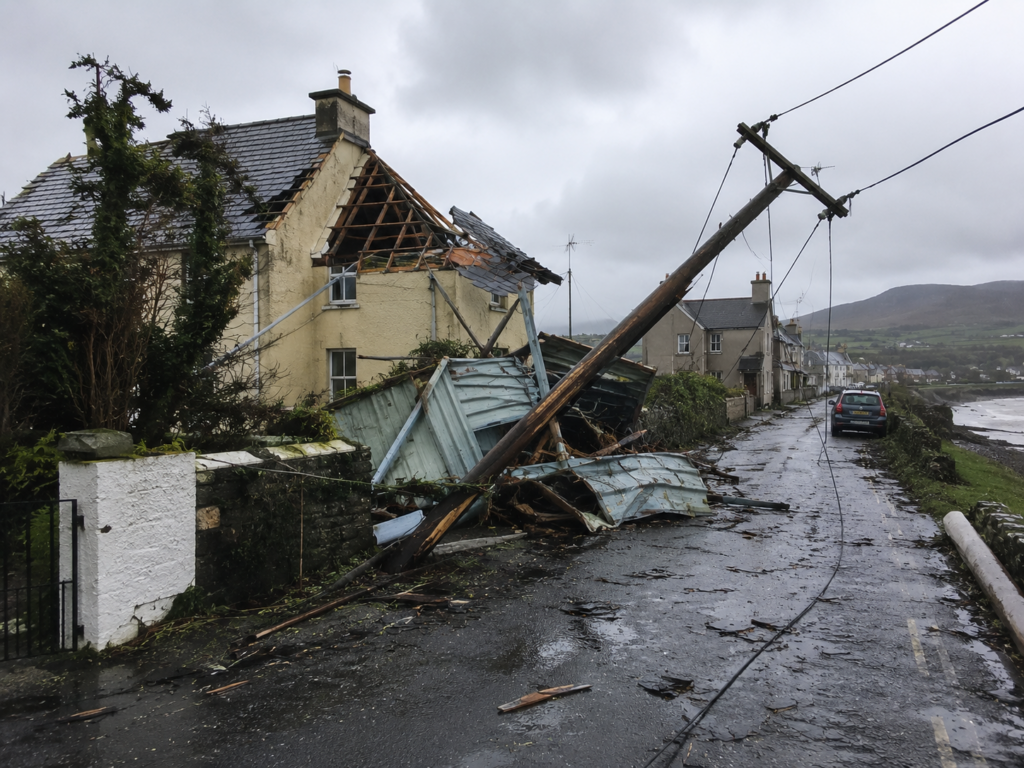
Storm damage to commercial premises creates a more complex claim than domestic damage. The physical damage to the building is one element. Business interruption, the trading loss caused by being unable to operate while repairs are underway, is often the larger financial issue and sits as a separate claim stream within a commercial policy.
Insurance Claim Solutions handles storm damage claims for business owners across Ireland. Commercial claims require a more detailed initial policy review, precise quantification of physical loss and business interruption separately, and more layered negotiations with the insurer. The initial assessment by the insurer’s loss adjuster sets parameters that can be difficult to move later, which is why early professional input can be particularly important in commercial claims.
If your business premises suffered storm damage and your trading has been disrupted, contact Insurance Claim Solutions to discuss what your policy covers and how both streams of the claim should be managed together.
How Long Does a Storm Damage Claim Take in Ireland?
Straightforward claims, a small number of missing roof tiles, minor water ingress, or damage to gutters or outbuildings can often be dealt with more quickly once the property has been assessed and repair estimates submitted.
Claims involving significant roof damage, structural issues, or widespread water ingress can take several months or longer. Where damage extends across multiple elements of the property, where there is a dispute over causation, or where reinstatement involves specialist work, the timeline stretches further.
Thorough documentation before any repair work begins is one of the most useful things you can do to help the timeline. A well-documented claim is generally easier to assess and harder to misunderstand than one where evidence is limited.
If your claim stalls significantly, or if the insurer’s settlement offer does not reflect the actual scope of your loss, there is a formal complaints process. In most cases, you must first raise a complaint with your insurer and allow them to complete their internal dispute resolution process. If the complaint remains unresolved, or a final response has issued, the matter may be referred to the Financial Services and Pensions Ombudsman. Insurance Claim Solutions can advise on whether escalation is appropriate in your particular situation.
Frequently Asked Questions
Does home insurance cover storm damage to my roof in Ireland?
It may be, provided the damage was caused by the storm event rather than pre-existing wear and tear or poor maintenance. Insurers will reference Met Éireann weather data to confirm conditions at your location and will assess the condition of the roof before the storm. A professional assessment from the outset can help to document the cause of the damage.
What if my insurer says the damage is due to wear and tear and not the storm?
Wear and tear is a common basis for storm claim disputes. It does not mean the claim is lost. A building surveyor can provide a professional assessment on whether the damage appears consistent with a sudden storm event rather than gradual deterioration.
Should I contact my insurer before calling a loss assessor?
Yes. Notify your insurer as soon as you can, as your policy requires. You can call us for advice too.
Does home insurance cover fallen trees that damage my property?
It may be, where a tree or debris strikes your property and causes damage, subject to your policy. The condition of the tree before the storm may be examined if there were a known hazard. Clearing a tree that fell without causing structural damage to the property is a different matter; that cost is often not covered.
Is water damage caused by the storm covered?
Where storm damage creates an entry point for water and damage results, this may be covered as a consequential storm loss, subject to policy wording and causation being accepted. The key question is causation: the insurer needs to accept that the storm created the entry point, not that a pre-existing condition did. This is where professional documentation makes a practical difference.
Can I carry out repairs before the insurer visits?
Reasonable temporary emergency repairs may be claimable. Cover the roof, board up the windows, stop water getting further in. Keep receipts and photographs before and after. Check with your insurer before starting permanent reinstatement work.
How is a loss assessor different from the insurer’s loss adjuster?
A loss adjuster is appointed and paid by the insurer. A loss assessor is appointed by the policyholder. Insurance Claim Solutions works for you, not the insurer.
Can I appoint a loss assessor if I have already made my claim?
Yes, at any stage, including where an initial offer has been made but not yet accepted. If you have concerns about a settlement offer, contact us before you accept anything.
What if my storm damage claim is rejected?
A rejection is not the end. Grounds for rejection can be challenged, and there is a formal complaints and escalation process that includes the FSPO. Contact Insurance Claim Solutions to discuss the grounds for the decision and what realistic options are available.
Talk to a public loss assessor about your storm damage claim.
Early advice can help with notifying, evidencing and presenting your storm damage claim.
Trevor Kelly is a Chartered Building Surveyor (MSCSI, MRICS) and has managed property insurance claims across Ireland since 2009. We work on a no win no fee basis and the initial consultation is free.
Call 01 870 9210 to speak with the team. You can also reach us through the contact form.
Trevor Kelly Insurance Claim Solutions Limited, trading as Insurance Claim Solutions, is regulated by the Central Bank of Ireland (Reg. No. C423441). This content is for general informational purposes only and does not constitute legal, financial or insurance advice. Policy cover depends on the specific wording, circumstances, exclusions and evidence in each case. For guidance specific to your situation, contact a regulated claims professional or your insurance broker.