
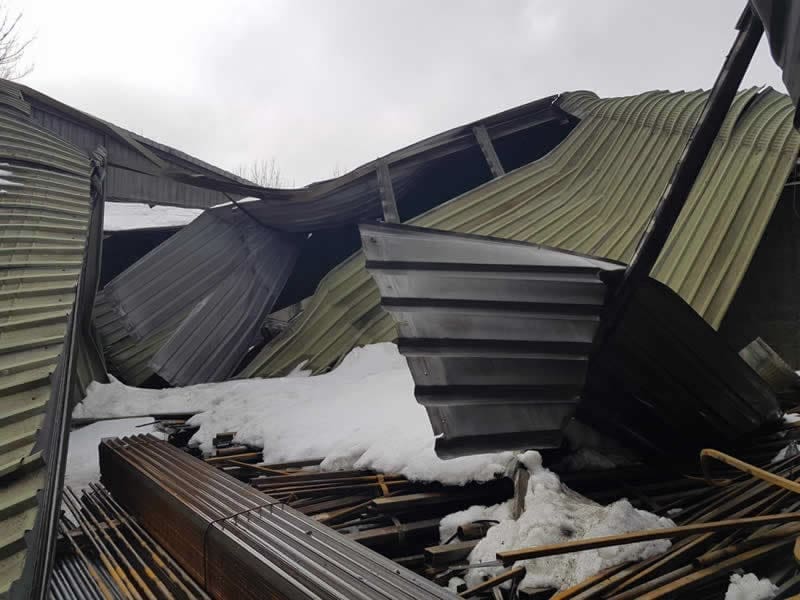
Storm Damage – Snow load and high winds were too much for these buildings
An unprecedented heavy snowfall between late February and early March 2018 and subsequent storm Emma led to a large number of buildings being damaged by strong winds and heavy snow load.
One such building was our client’s large industrial warehouse. The building suffered catastrophic collapse following the heavy snow; the collapse left the building in a very dangerous condition with a high risk of injury to the general public. This case study shows the complexity of business claims and how important it is to get the help of an experienced loss assessor.
Extensive Storm Damage

The client contacted ICS after the storm. We met with the building owners very shortly after we received the call. We documented the damage and devised an immediate emergency response plan.
Policyholders should not start permanent repair work without the insurer’s approval. Because of the large number of claims resulting from the storms, there was going to be a delay before the insurance loss adjuster would be able to attend the site.
To prevent further damage and protect the public, emergency works were carried out. As the storm damage to the building was so extensive, the emergency plan included making the building safe, along with the segregation and enclosure of the damaged area to prevent any risk of harm to the general public and adjoining business owners.
As the damage caused by the storm was extensive, my clients were very worried about the complexities of the claims process and the possible outcome of their storm damage claim.
Our initial meeting with the insurers covered the emergency works carried out and the expenses incurred.
We negotiated the extent of the emergency works needed, the potential costs and a claims management strategy to be taken to establish the full extent of reinstatement.
The building was made up of reinforced concrete walls, concrete floors and a steel portal frame, it was very important to ascertain the full structural condition of the building before undertaking repairs. We helped our client select and appoint a professional consulting engineer, who then assisted us in compiling a full inventory of all required repairs.
Unfortunately, in this case, the building was so badly damaged that a repair was not going to be feasible and a full rebuild was required. We compiled and formulated an extensive Bill of Quantities for the rebuilding with the input of our client and their design team.
Armed with all the evidence and the rebuild estimates, we entered into negotiations with the insurance company and eventually, following months of negotiations, meetings and discussions both on and off site, the claim was settled.
Storm damage claims, especially commercial claims, are very technical in nature and typically require a number of rounds of negotiation.
Once the insurance company had agreed to the terms, we assisted our client with the tender process and the appointment of a building contractor. The replacement building was under construction at the time of writing. As new buildings have to be designed and built in line with the current building regulations, the replacement is being built to today’s standards rather than those of the original building.