
Flood water has come into your home and you don’t know where to start.
What you do in the first 24 hours affects your safety, the condition of your property, and your insurance claim. This guide takes you through what to do, in order: staying safe, limiting the damage, gathering evidence, notifying your insurer, and avoiding mistakes that can complicate a claim.
Step 1: Get Safe Before You Do Anything Else
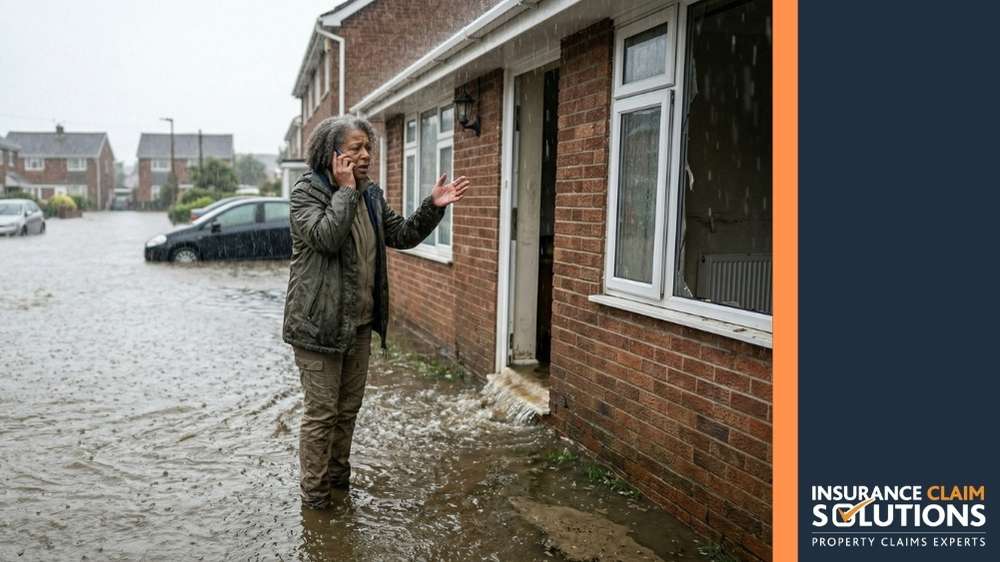
Your safety comes first.
Floodwater is not clean water. It can carry sewage, bacteria and other contaminants, particularly when it has come from drains or overflowing rivers. Avoid walking through deep standing water unless you have no alternative.
Do not turn on electricity in any area that has been flooded or is still wet. If you can reach your fuse board without standing in water, switch the electricity off at the board; if you cannot, stay out of the area and contact ESB Networks. Do not turn your power, water or gas back on until they have been checked by a qualified professional.
If the flooding is severe and your home is unsafe, leave and contact the emergency services or your local authority. Check on elderly or vulnerable neighbours who may need help.
Step 2: Stop More Water Getting In
Once you are safe, try to stop the damage getting worse.
If the source is inside the house, such as a burst pipe or an overflowing appliance, turn off the water at the stopcock straight away. If the water is coming from outside, sandbags at doorways and covers on air bricks can help slow it while you wait for levels to drop.
Where a property is heavily saturated, pump or drain standing water out in stages rather than all at once, as removing it too quickly can put pressure on walls and floors.
Keep receipts for any emergency equipment hire, sandbags or water removal service you use. Reasonable emergency costs to limit damage may be recoverable under your policy, and your insurer will want to see evidence of them.
Step 3: Document the Damage Before You Clean Up
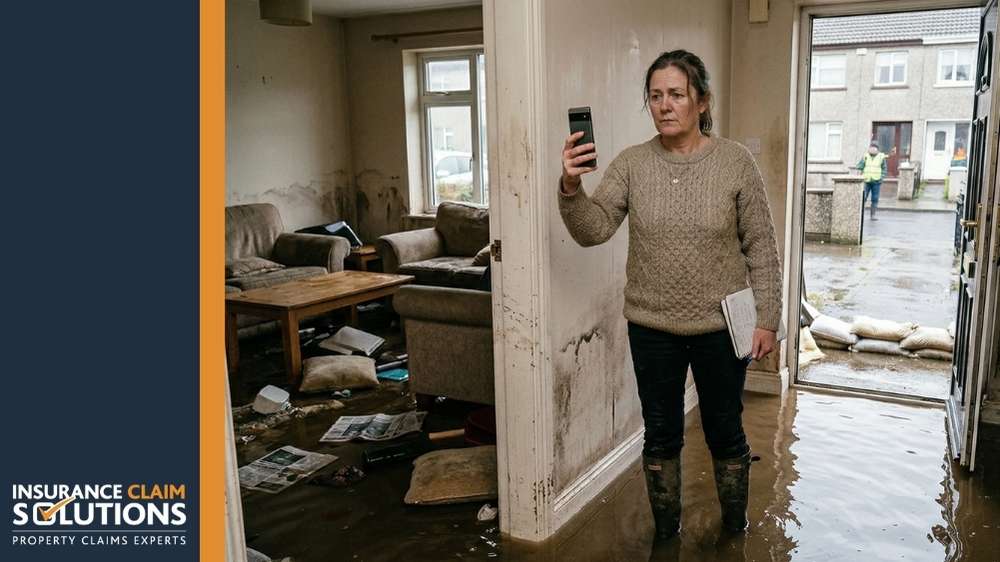
This step matters a great deal for your claim.
Do not start cleaning up until you have photographed and filmed every affected area: walls, floors, ceilings, skirting boards, furniture, appliances, belongings, and any visible source of the water.
Mark the water level on the walls with a pen or tape before it fades. The height the water reached is an important part of the record of your loss.
Film a walkthrough of the whole property. A video shows how the damage spreads across rooms in a way that photographs alone may not. Make sure your photos and videos are dated.
Write down when the flooding started, where the water appeared to come from, what caused it, and what you did in response. If a named storm or flood warning was in place, note that too.
Step 4: Notify Your Insurer Without Delay
As soon as you are safe, contact your insurer. Take photographs as you go, but do not delay the call to your insurer for them. If you plan to appoint a loss assessor, contact us at the same time.
Call your insurer’s claims line and have your policy number ready. Be factual: where the water came from, when it started, which areas are affected, and what you have done to limit the damage.
Prompt notification matters. Most policies require you to report a claim promptly, and delays can complicate how a claim is assessed.
Ask whether alternative accommodation is covered if your home cannot be lived in. Many policies include this, but not all. If you need to move out, keep every receipt for accommodation and extra living costs from the date of the flood.
From this point on, keep a written log of every call: who you spoke to, the date and time, and what was agreed.
Step 5: Understand What Your Policy Covers

Flood cover is not automatically included in every Irish home insurance policy.
The source of the flooding matters. River flooding, coastal flooding, surface water and drains backing up can each be treated differently depending on your policy. A claim for rainwater getting in through a storm-damaged roof is assessed on different grounds from a claim for rising groundwater.
Where flood cover is included, it may extend to structural repairs, damaged contents and flooring, drying and clean-up costs, and alternative accommodation. Read your policy schedule and ask your insurer to confirm what type of flooding is covered.
If the wording is unclear, or you are not sure whether your flooding falls within your cover, a public loss assessor can help. Insurance Claim Solutions acts only for policyholders. You can read more about how we handle flood damage insurance claims.
General information on flooding is available from citizensinformation.ie. The OPW’s flood maps at floodinfo.ie show whether your property is in a mapped flood risk area.
Step 6: Don’t Dispose of Damaged Items Too Soon
A common mistake after a flood is removing and throwing out damaged materials before your insurer has seen them.
Flooring, skirting, furniture and appliances should be assessed before they are removed. Your insurer may appoint a loss adjuster to inspect the damage on its behalf. If items are gone before that inspection, it is harder to establish the value of the claim.
Don’t rip out floors or open up walls until the damage has been documented and your insurer has agreed the scope of work. If items must be removed for hygiene or safety reasons before an inspection, photograph them thoroughly first and keep any disposal receipts.
This applies to electrical items too. Floodwater can affect sockets, wiring, boilers and appliances in ways you cannot see. Do not reconnect or test anything that has been in floodwater until a qualified electrician has checked it.
What Type of Flooding Does Irish Home Insurance Cover?
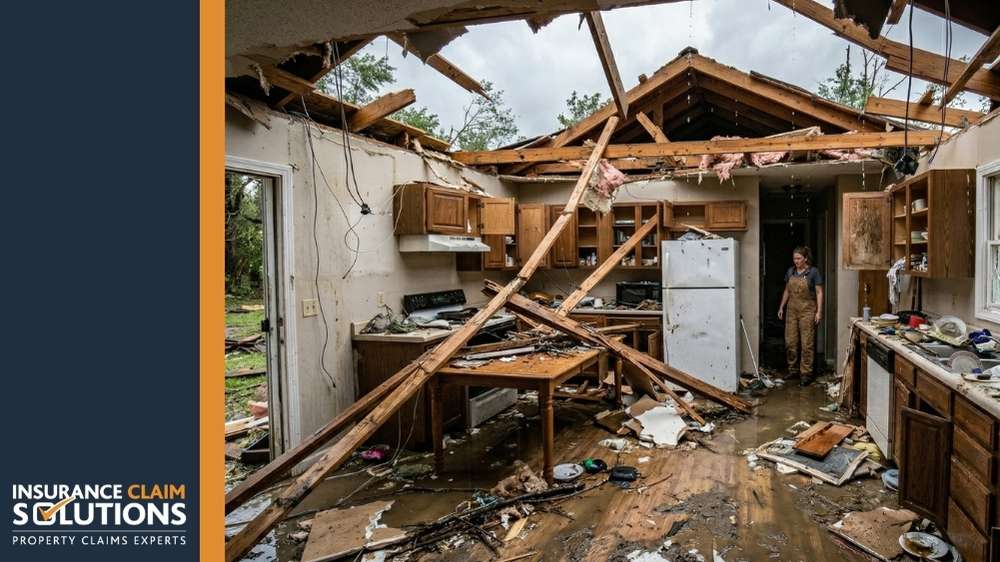
Not all flooding is treated the same way, and knowing the difference helps when you make your claim.
Storm-related water damage, where water gets in because a storm has damaged the roof, windows or walls, is typically assessed under the storm section of a home policy.
Surface water flooding, caused by heavy rain overwhelming drains or running off the ground, may or may not be covered. Check your schedule for references to surface water.
River and coastal flooding is often excluded or limited in areas identified as high risk. Properties in flood risk areas may need specialist cover. Check how your policy wording treats river and coastal flooding.
What Is a Public Loss Assessor and Do You Need One?
Your insurer may appoint a loss adjuster to assess the damage. The loss adjuster is appointed by the insurer and assesses the claim on the insurer’s behalf.
A public loss assessor is appointed by you and acts only for you, the policyholder. They review your policy, record the damage, and deal with the insurer’s representative on your behalf.
Trevor Kelly Insurance Claim Solutions Limited, trading as Insurance Claim Solutions, is regulated by the Central Bank of Ireland (Reg. No. C423441).
Appointing a loss assessor is worth considering when the damage is significant, the policy wording is complex, or you would like someone acting for you to record and present the damage.
We cannot say in advance what a claim will achieve. Find out more about our claims management service.
Mould, Damp and Hidden Damage After a Flood
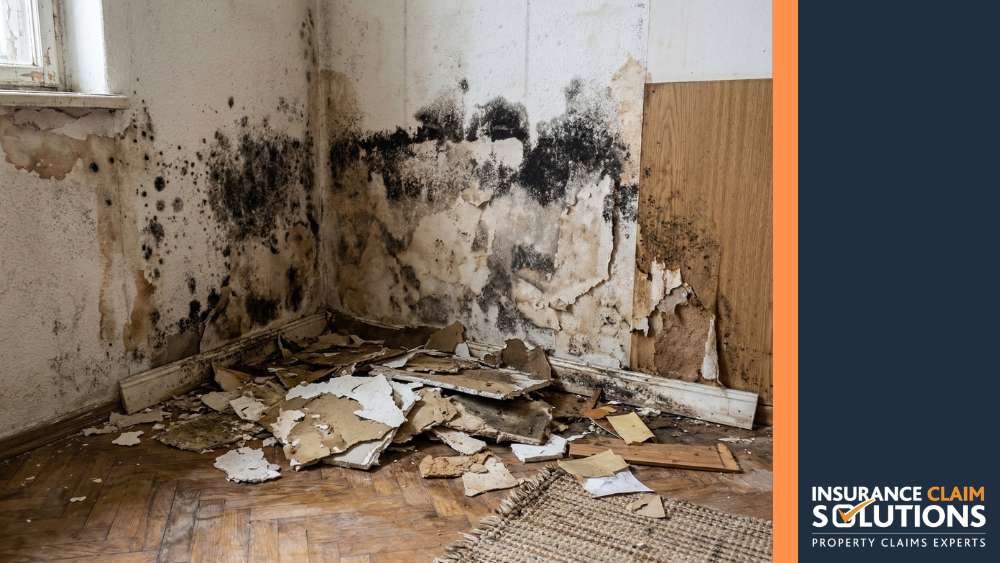
Flood damage doesn’t stop when the water goes down.
Mould can start to grow quickly in a property that has not been properly dried. Insurers may want evidence that mould is linked to the flood and that reasonable steps were taken to dry the property. Dated photographs and notes from the start of the claim help with this.
Some structural damage may not show for some time. Watch for new or widening cracks in walls, particularly above windows and doors, and any change in the line of the roof. If you notice these, tell your insurer and get advice from a structural engineer.
A seriously flooded property usually needs professional drying equipment; domestic dehumidifiers may not be enough. Check that drying is included in the agreed scope of works where your policy covers it.
For guidance on cleaning up after a flood, see floodinfo.ie.
Frequently Asked Questions
Should I clean up before the loss adjuster visits?
Take emergency steps to limit further damage, but do not remove floors, open up walls or throw out damaged items before they have been inspected. Photograph and film everything first. If items must be removed for hygiene or safety reasons, document them and keep disposal receipts.
Does Irish home insurance cover flood damage?
Not automatically. Flood cover varies between policies. River and coastal flooding is often excluded or limited in high-risk areas, surface water flooding may or may not be covered, and storm-related water damage is usually assessed under storm cover. Check your schedule and ask your insurer.
What is the difference between a loss adjuster and a loss assessor?
A loss adjuster is appointed by your insurer to assess the claim on its behalf. A public loss assessor is appointed by you and acts in your interest as the policyholder.
Can I get alternative accommodation after flood damage?
Many policies include alternative accommodation if your home is uninhabitable after an insured event, but it varies and is not automatic. Ask your insurer when you first report the damage and keep all receipts from the date of the flood.
Summary
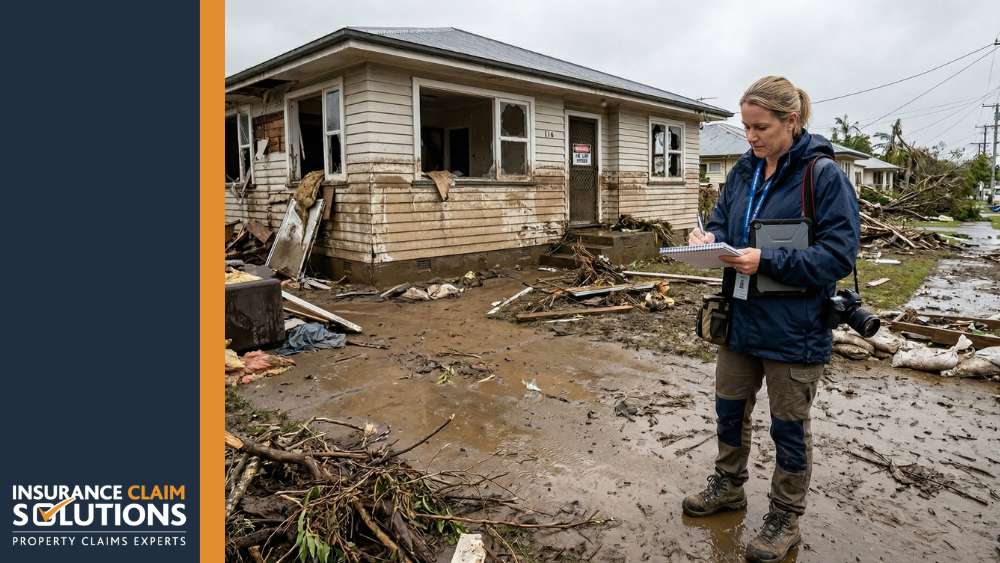
In the first 24 hours after a flood: get safe, stop more water getting in, document the damage before you clean up, notify your insurer promptly, and don’t throw out damaged items until your insurer has seen them.
If you would like help understanding your policy or managing a flood damage claim, call Insurance Claim Solutions on 01 870 9210 or contact us here. Your initial consultation is free.
This article is general information only and is not advice on your specific policy. Cover depends on your policy wording.