
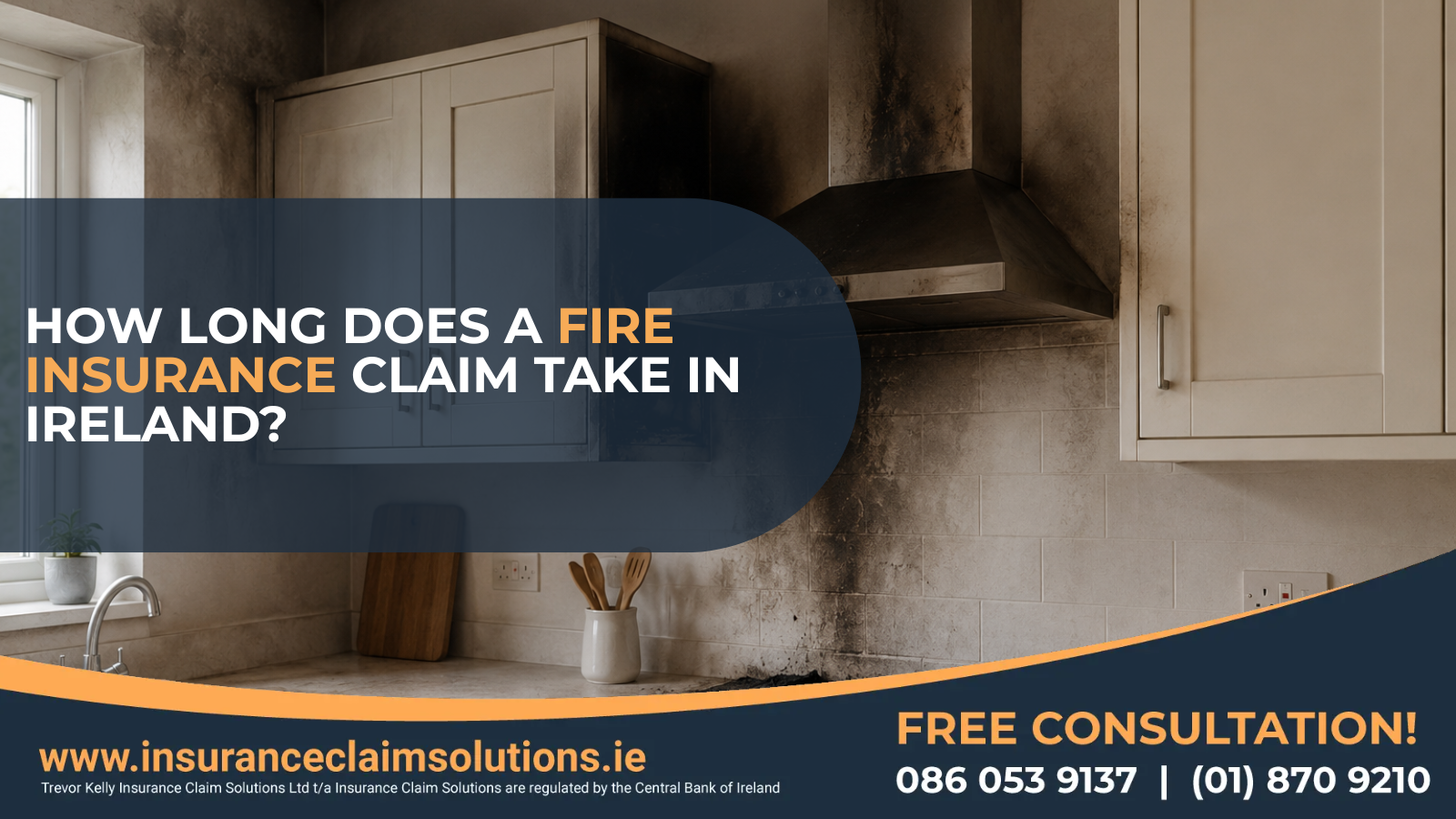
Most people making an accidental kitchen fire insurance claim in Ireland assume the hard part is behind them once the flames are out. It is not. Within days of lodging your claim, the insurer appoints a professional to assess your loss. That professional works for the insurance company, not for you. Most homeowners have never heard of the one person who could be in their corner instead.
What follows covers what your policy actually covers, where the claims process tends to go wrong, and what the decisions you make in the first 48 hours mean for the final settlement figure.
Does Home Insurance Cover Accidental Kitchen Fires in Ireland?
Most standard home insurance policies in Ireland cover accidental kitchen fires, including fires caused by cooking incidents, faulty appliances, electrical faults, and unattended heat sources. Cover typically extends to the cost of structural repairs, smoke and soot removal, water damage caused by firefighting, and replacement of damaged contents.
That said, cover is not automatic or unlimited. Two things catch homeowners out regularly.
The first is accidental damage cover. Some policies include it as standard. Others treat it as an optional add-on. If your policy does not include accidental damage cover, a kitchen fire caused by a moment of inattention may fall into a grey area. Check your policy documents now, before a claim arises, not after.
The second is under-insurance. If the rebuild cost of your property is higher than the sum insured on your policy, your insurer can apply what is called averaging: a proportional reduction to your payout. If your home would cost €350,000 to rebuild and your policy only covers €250,000, the insurer can reduce your settlement by the same proportion. This catches a significant number of Irish homeowners every year.
If you are unsure whether you are adequately insured, Insurance Claim Solutions offers a policy review service called Claim Shield. It is worth doing before a claim, not during one.
What to Do Immediately After a Kitchen Fire
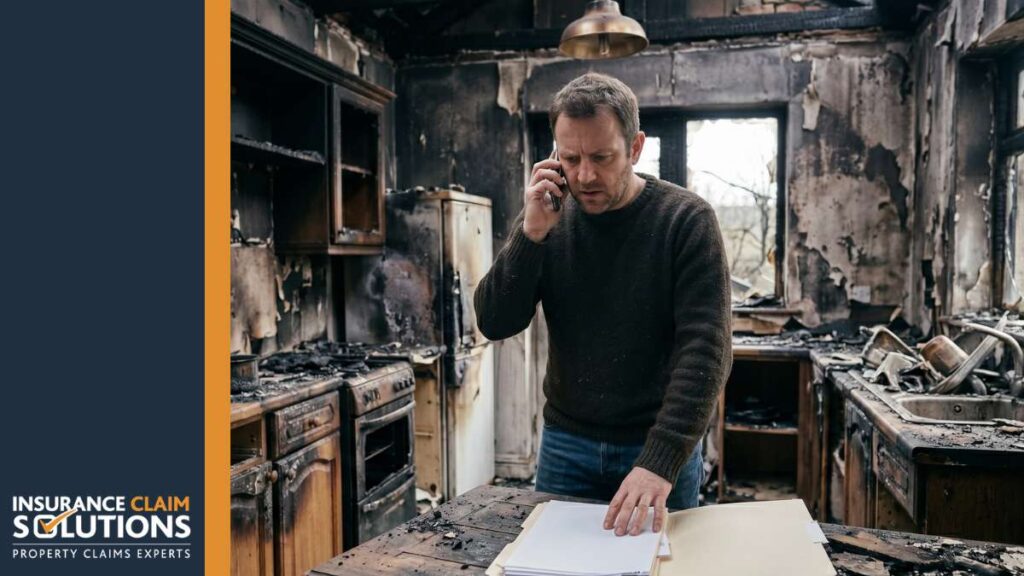
The decisions you make in the first 48 hours directly affect what you can claim and what you can prove. Here is the right order.
| 1. Confirm everyone is safe and the fire is fully out. Wait for clearance from the fire brigade before re-entering the property. Do not assume the fire is contained. Even a localised kitchen fire can leave hidden structural damage: weakened ceiling joists, compromised wiring, and smoke well beyond the room itself. | 2. Document everything before you touch anything. This is the step most homeowners get wrong. The impulse to start cleaning up is understandable. Resist it. Your insurer will scrutinise the evidence you provide, and once you clean, paint over, or remove damaged items, that evidence is gone. |
| 3. Notify your insurer. Contact your insurance company promptly and report the claim. Have your policy number to hand. Give a factual account of what happened and do not speculate about cause or liability at this stage. | 4. Appoint an independent loss assessor before the loss adjuster visits. (optional but adviseable) Most homeowners have never heard of this option. The ones who use it consistently get better outcomes. Appointing a loss assessor before the insurer’s loss adjuster attends means the claim documentation is built correctly from the start, not corrected afterwards. |
Take photographs and video of every affected area. The kitchen in full detail. Every appliance, every wall, every ceiling. Adjacent rooms too, because smoke and soot travel further than most people expect. The loft space if accessible. Note the water damage from firefighting separately from the fire damage itself. They are assessed differently, and the distinction matters to your final settlement.
Keep damaged items in place until a professional has assessed them.
Ask your insurance company when their loss adjuster will attend the property. That question matters more than most people realise, and the section below explains why.
The Difference Between a Loss Adjuster and a Loss Assessor
This distinction is not widely understood, and that lack of understanding costs Irish homeowners money every year.
A loss adjuster is appointed by your insurer. They work for the insurance company. Their job is to assess the damage and report back to your insurer, and they have a commercial interest in keeping the settlement within a range the insurer considers acceptable. They are not there to help you get the maximum you are entitled to. They are there to establish what the insurer is liable for. Those are not the same thing.
A public loss assessor is appointed by you. They work for you alone. They carry out an independent damage assessment, prepare and lodge the claim documentation, and negotiate directly with the insurer’s loss adjuster on your behalf. Their job is to make sure nothing is missed, nothing is undervalued, and that the final settlement reflects the actual cost of restoring your home.
Trevor Kelly has been doing this since 2009. In that time, one pattern has appeared more consistently than any other: the homeowners who accept the insurer’s first assessment without independent representation are the ones who end up phoning months later, asking whether anything can still be done.
The insurer has a professional on their side from the moment the claim is lodged. Most homeowners have no one.
Insurance Claim Solutions works on a no-win, no-fee basis. There is no upfront cost and nothing to pay unless your claim settles. The fee comes from the settlement, not your pocket before it arrives.
In Ireland, public loss assessors are regulated by the Central Bank of Ireland. Insurance Claim Solutions holds registration number C423441 and is authorised to act on behalf of policyholders throughout the claims process.
What a Kitchen Fire Insurance Claim Actually Covers
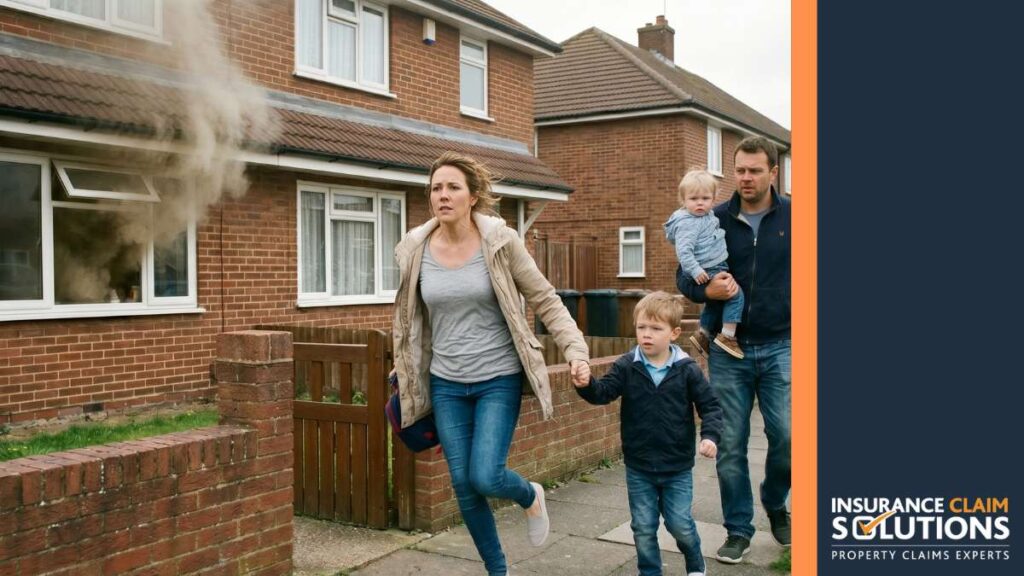
A kitchen fire claim is rarely just about the kitchen. Here is what a thorough claim should address.
Structural repairs. Walls, ceilings, flooring, and roof structures if compromised by heat or water.
Smoke and soot remediation. Smoke travels through a property via ventilation systems, wall cavities, and ceiling voids. Soot left untreated causes ongoing damage and affects air quality long after the visible damage is dealt with.
Water damage. Fire brigade attendance means significant water on site. Flooring, subfloor, walls, and furniture can all sustain water damage independently of the fire itself. This is one of the most commonly underestimated parts of a kitchen fire claim.
Electrical damage. Heat affects wiring, sockets, and appliances well beyond the immediate area. This needs independent assessment; it is easy to miss and easy to exclude.
Contents replacement. Appliances, furniture, personal items destroyed or damaged by fire, smoke, or water.
Temporary accommodation. If your home is uninhabitable during reinstatement, many policies cover the cost of alternative accommodation. Most homeowners never claim this because they do not know it exists.
Business interruption. For business owners with commercial property, business interruption cover may apply separately. This is a distinct claim type with its own process and valuation method.
The risk in a kitchen fire claim is not always in the size of the damage. It is in what gets missed, what gets undervalued, and what gets excluded because it was not properly documented and presented.
What Happens If the Insurer’s Settlement Offer Is Too Low

It happens more often than most people realise. A loss adjuster attends, produces an assessment, and the insurer’s offer comes in below what the actual reinstatement will cost. At that point, many homeowners feel they have no choice but to accept.
You do have a choice.
If you have an independent loss assessor, they will challenge the assessment, provide counter-documentation, and negotiate on your behalf. On significant kitchen fire claims, the difference between an insurer’s opening offer and a fully negotiated settlement is often the difference between a partial repair and a full reinstatement. Between living with what the insurer decided was sufficient and actually getting your home back to what it was.
If you have already accepted a settlement and believe it was inadequate, contact Insurance Claim Solutions to discuss your position. Depending on the circumstances and timing, there may still be options available.
How the Kitchen Fire Claims Process Works: Step by Step
- Ensure everyone is safe. Wait for fire brigade clearance before re-entering.
- Document all damage thoroughly. Photograph and video everything before touching anything.
- Notify your insurer promptly and register the claim.
- Appoint a public loss assessor, ideally before the insurer’s loss adjuster attends the property.
- Independent damage assessment by your loss assessor, including hidden damage such as smoke penetration behind walls, soot in ceiling voids, and electrical damage.
- Claim preparation and submission with full supporting documentation.
- Negotiation between your loss assessor and the insurer’s loss adjuster.
- Settlement is agreed upon and reinstatement work begins.
Early involvement from an independent loss assessor consistently produces better outcomes. The claim is set up correctly from the start, the documentation is complete, and you are not sitting in someone else’s house three months later wondering why the process has stalled.
Frequently Asked Questions
Does home insurance cover accidental kitchen fires in Ireland?
Yes, in most cases. Standard home insurance policies in Ireland cover accidental fires caused by cooking incidents, appliance faults, and electrical issues. Cover for associated smoke, soot, and water damage is typically included. The catch is whether your policy includes accidental damage cover as a category. Some do not include it as standard. Check your documents before you assume.
What should I do immediately after a kitchen fire?
Ensure everyone is safe and wait for fire brigade clearance before re-entering. Then document everything with photographs and video before you touch or move anything. After that, notify your insurer and consider appointing an independent loss assessor before the insurer’s loss adjuster attends. The order matters.
Will my insurance premiums go up after a kitchen fire claim?
Probably, yes. Most insurers review premium rates at renewal following a claim. The size of the increase depends on your insurer, your claims history, and the scale of the settlement. Do not let that stop you claiming what you are entitled to. The settlement value on a significant kitchen fire claim almost always outweighs a premium increase over subsequent years.
How long does a kitchen fire insurance claim take in Ireland?
Straightforward, well-documented claims can settle within 6 to 10 weeks. Add structural disputes, contested assessments, or an under-settled first offer that needs negotiation, and it stretches. Having a loss assessor involved from the start tends to compress the timeline because the documentation is complete and the back-and-forth with the loss adjuster is handled by someone who does it every day.
Do I need a loss assessor for a kitchen fire claim?
You are not required to appoint one. You are also not required to have a solicitor when you are in a legal dispute. The insurer appoints a professional to assess your loss and represent their position. Whether you have someone doing the same for you is a choice, and it has real consequences for the final number.
Is smoke and water damage covered in a fire claim?
Yes. Smoke damage in rooms beyond the kitchen and water damage from firefighting are both covered under most standard fire damage claims. These are the two items most commonly underestimated in scope and undervalued in the insurer’s initial assessment.
What is under-insurance and how does it affect my claim?
If the sum insured on your policy is lower than your property’s actual rebuild cost, the insurer can apply averaging and reduce your payout proportionally. Many Irish homeowners are under-insured without knowing it. A policy review before a claim arises is the only reliable way to find out where you stand.
Can I claim for temporary accommodation after a kitchen fire?
Yes, if your home is uninhabitable and your policy includes alternative accommodation cover. Most do. Most homeowners do not claim it because no one tells them it exists. Ask your loss assessor to include it from the start.
Insurance Loss Assessor Dublin

The insurer has professional representation from the moment you make the call. You should too.
Insurance Claim Solutions has been managing property insurance claims across Ireland since 2009. Trevor Kelly is a qualified building surveyor and public loss assessor, accredited by the Society of Chartered Surveyors Ireland and regulated by the Central Bank of Ireland (Reg. No. C423441). The team handles every aspect of the claim, from the initial site assessment through to final settlement, so you can focus on getting your home and your life back to what they were.
There is no upfront cost. You pay nothing unless your claim settles successfully.
If you have had a kitchen fire and you want to know exactly where you stand, call 01 870 9210 or 086 053 9137. The first conversation is free, takes ten minutes, and will tell you plainly what your claim is worth and what needs to happen next.
Insurance Claim Solutions (trading name of Trevor Kelly Insurance Claim Solutions Limited) is regulated by the Central Bank of Ireland. Registration No. C423441. This article is for general information purposes only and does not constitute financial or legal advice. Always refer to your own policy documents and seek independent professional advice if you are unsure about your cover or entitlements.